-
Shop
- Adidas
- Advanced Technologies
- AI Skills Mastery 2026 Collection
- Astrology & Tarot Products
- Beauty
- Beauty Guides Collection
- Best-Sellers
- Car Accessories
- Confidence
- Dating & Social Skills
- Digital Resources
- AI & Technology
- AI Skills
- Budgeting & Saving
- Car Buying & Ownership
- Cozy Feast Collection
- Electronics & Technology
- Emotional Intelligence
- Entrepreneurship & Business Growth
- Financial Education
- Financial Independence
- Financial Mindset & Psychology
- Goal Setting
- Hobbies
- Home Styling & Organization
- Kitchen & Recipes
- Leadership
- Mindfulness
- Mindset
- Motivation
- Online Business
- Parenting & Child Development
- Pet Lifestyle & Wellness
- Positive Thinking
- Productivity
- Self Confidence
- Sleep Improvement
- Smart Life with AI
- Stress Management & Relaxation
- Travel Planning
- Yoga & Fitness
- Yoga & Mind-Body Practices
- Education & Learning
- Family & Parenting
- Fashion
- Alexander McQueen
- Bags
- Bags & Wallets
- Balenciaga
- Belts
- Blazers
- Bottega Veneta
- Brunello Cucinelli
- Burberry
- Chanel
- Chloé
- Dior
- Dolce & Gabbana
- Dresses
- Etro
- Fendi
- Gucci
- Hats & Hair Accessories
- Hoodies & Sweatshirts
- Jacquemus
- Jil Sander
- Keychains
- Kiton
- Luggage
- Miu Miu
- Off-White
- Outerwear
- Prada
- Rick Owens
- Saint Laurent
- Shoes
- Socks & Tights
- Sweaters & Cardigans
- The Row
- Tom Ford
- Tops & Shirts
- Valentino
- Valentino Garavani
- Versace
- Vivienne Westwood
- Watches
- Fashion Accessories
- Furniture
- Gadgets
- Health & Beauty
- Health & Wellness
- Home & Garden
- Home Supplies
- Jewelry
- Kids & Babies
- Kitchen
- Kitchen Best-Sellers
- Nike
- Patio, Lawn & Garden
- Personal Growth
- Personal Style & Fashion
- Pet Care
- Pet Supplies
- Pets
- Smart Home Living Guides
- Sport & Outdoors
- Stress Relief & Relaxation
- Super Deals
- TikTok Growth & Monetization Mastery
- Travel
- Travel & Adventure
- Wealth
- Wellness
- Popular
- Best deals
Spot Habits Holding You Back—Without Self-Criticism
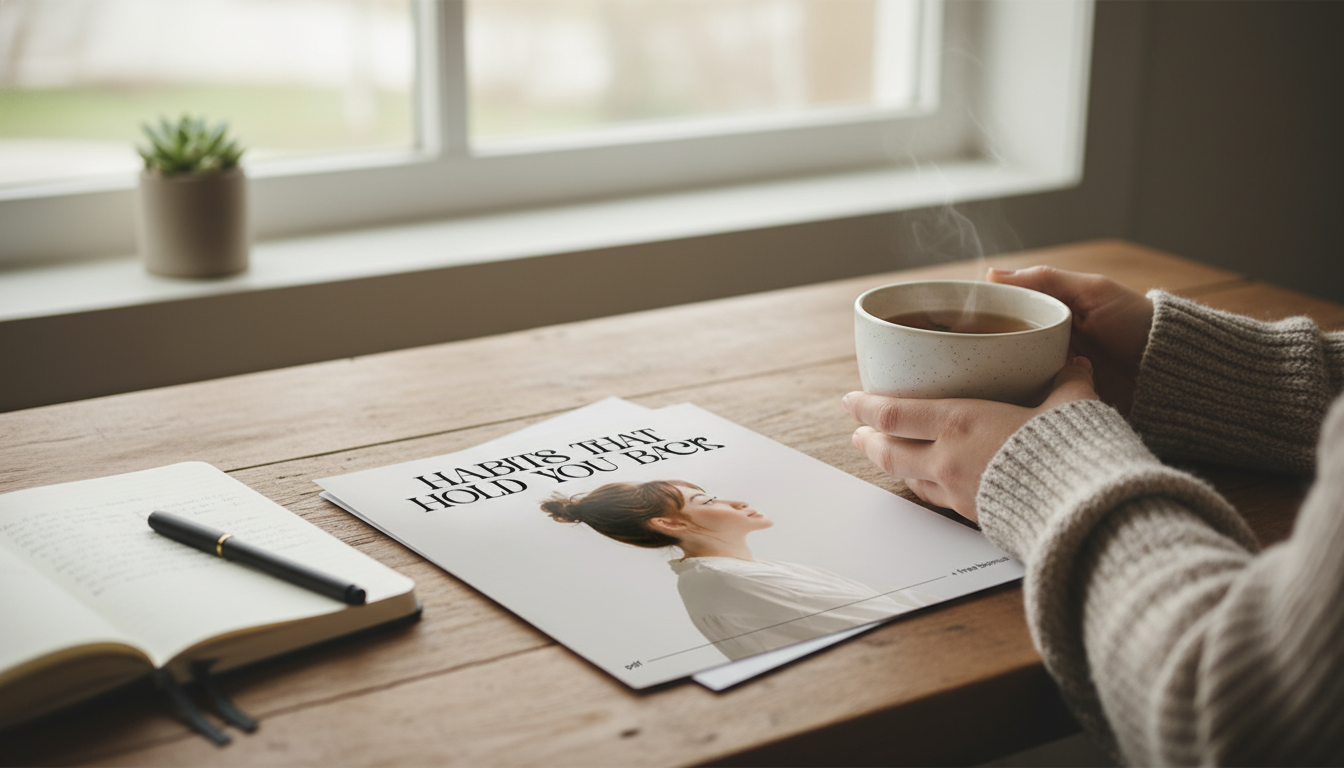
How to Spot Habits That Hold You Back (Without Turning It Into Self-Criticism)
Some habits don’t look like “bad habits” at all. They show up as routines, coping mechanisms, or default reactions that once helped—but now quietly limit confidence, consistency, and progress. The goal isn’t to shame yourself into change; it’s to notice what’s happening clearly enough to choose something better in the moments that matter.
A simple self-awareness practice can make patterns visible, especially when stress is high and the brain wants the quickest relief. If you’d like a structured way to do that, the Printable self-awareness checklist digital download is designed to help you capture triggers, payoffs, and small replacements—so insight turns into sustainable change.
When a “normal” routine becomes a roadblock
Habits that hold you back are often protective. They reduce discomfort, lower the risk of failure, or keep life predictable. That’s why they can be so persistent: they work in the short term—even when the long-term cost keeps stacking up.
Many patterns are also context-dependent. A behavior that helped during a stressful season (staying busy, saying yes to everything, numbing out at night) can become limiting later when your needs shift toward growth, creativity, or deeper connection.
The pivot point is awareness. Naming the pattern separates “who you are” from “what you do.” From there, the practical goal becomes simple: reduce automatic reactions and increase intentional choices in a few high-impact situations.
Clear signs a habit is holding you back
If you’re unsure whether a routine is actually a problem, look for these signals:
- Short-term relief, long-term cost: it soothes stress now but creates regret, clutter, conflict, or missed opportunities later.
- It repeats under the same emotions: anxiety, boredom, shame, perfectionism, or overwhelm reliably trigger it.
- It narrows options: decisions feel smaller over time—less energy, fewer chances taken, reduced creativity, a shrinking social circle.
- It creates a “reset loop”: the same Monday restart, apology, or vow to change without adjusting the trigger or environment.
- It competes with values: time, money, or attention goes to the habit rather than priorities like health, learning, relationships, or purpose.
- It requires secrecy or justification: minimizing, hiding, or rationalizing is a cue to look closer.
- It disrupts basics: sleep, focus, mood, or consistent follow-through are repeatedly affected.
Habit patterns to watch and what they often disguise
| Pattern | What it can look like | What it often protects | A gentler reframe |
|---|---|---|---|
| Perfection delay | Overplanning, endless tweaking, waiting for the “right time” | Fear of judgment or failure | Start with a 10% version and iterate |
| People-pleasing | Saying yes automatically, avoiding honest boundaries | Fear of conflict or rejection | Practice a kind, clear “not this time” |
| Avoidance scrolling | Phone use when stressed or bored, lost time blocks | Emotional numbing, overwhelm | Swap in a 5-minute reset routine |
| All-or-nothing thinking | One slip becomes quitting, “I ruined it” | Need for certainty and control | Aim for “next right step,” not perfect |
| Self-criticism as motivation | Harsh inner talk, comparing, dismissing progress | Trying to prevent mistakes | Use supportive accountability instead |
How the self-awareness checklist turns patterns into data
When you’re stuck in a loop, the mind tends to reach for labels: “I’m lazy,” “I have no discipline,” “I always mess up.” A checklist approach does the opposite—it captures specifics.
- Capture what actually happened: where you were, who you were with, what you felt, and what the immediate “payoff” was.
- Focus on one habit at a time: less overwhelm, more clarity on the next step.
- Track frequency and intensity: a habit that happens twice a week but derails the whole day is a high-leverage target.
- Find the if-then link: If a trigger happens, then the habit follows—this points directly to a replacement plan.
- Pair awareness with compassion: noticing is progress, even before behavior changes.
If you want a ready-to-use template, the How to Spot Habits That Hold You Back checklist is built around triggers, payoffs, and low-friction alternatives—so you can make one small adjustment at a time.
A 10-minute weekly review routine (simple and repeatable)
Quick weekly check-in (copy/paste friendly)
| Prompt | Your notes |
|---|---|
| Most common trigger this week | |
| Habit that followed | |
| Short-term payoff I was seeking | |
| Long-term cost I noticed | |
| One small replacement for next time | |
| One environment change to support it |
Turning self-awareness into mindset change without burning out
For more background on how habits work (and why they’re so automatic), these sources are helpful: American Psychological Association – Habits, National Institutes of Health (NCCIH) – Stress, and the research often cited on habit formation timeframes: Lally et al. (2010), European Journal of Social Psychology.
Printable + digital use: practical ways to fit it into real life
Digital download details
If you’re also refining daily choices (like what to wear when decision fatigue hits), a separate resource that pairs well with routine-building is the Budget Style Strategy Bundle for Everyday Looks – 5-in-1 Digital Download.
FAQ
How often should the checklist be used?
Use it daily for 7 days for one habit, then switch to a weekly review to spot patterns. Consistency matters more than perfection, so adjust the cadence to something you’ll actually keep doing.
Can the checklist be used digitally instead of printing?
Yes—use a PDF annotation tool, a tablet, or a notes app to type directly into your weekly copy. Saving each week as a separate file makes trends easier to see over time.
What if identifying habits brings up a lot of emotion?
Pause and do a quick grounding reset (slow breathing, a short walk, or a glass of water) before continuing. If distress feels significant or keeps returning, professional support can help you process what’s coming up safely.















Leave a comment