-
Shop
- Adidas
- Advanced Technologies
- AI Skills Mastery 2026 Collection
- Astrology & Tarot Products
- Beauty
- Beauty Guides Collection
- Best-Sellers
- Car Accessories
- Confidence
- Dating & Social Skills
- Digital Resources
- AI & Technology
- AI Skills
- Budgeting & Saving
- Car Buying & Ownership
- Cozy Feast Collection
- Electronics & Technology
- Emotional Intelligence
- Entrepreneurship & Business Growth
- Financial Education
- Financial Independence
- Financial Mindset & Psychology
- Goal Setting
- Hobbies
- Home Styling & Organization
- Kitchen & Recipes
- Leadership
- Mindfulness
- Mindset
- Motivation
- Online Business
- Parenting & Child Development
- Pet Lifestyle & Wellness
- Positive Thinking
- Productivity
- Self Confidence
- Sleep Improvement
- Smart Life with AI
- Stress Management & Relaxation
- Travel Planning
- Yoga & Fitness
- Yoga & Mind-Body Practices
- Education & Learning
- Family & Parenting
- Fashion
- Alexander McQueen
- Bags
- Bags & Wallets
- Balenciaga
- Belts
- Blazers
- Bottega Veneta
- Brunello Cucinelli
- Burberry
- Chanel
- Chloé
- Dior
- Dolce & Gabbana
- Dresses
- Etro
- Fendi
- Gucci
- Hats & Hair Accessories
- Hoodies & Sweatshirts
- Jacquemus
- Jil Sander
- Keychains
- Kiton
- Luggage
- Miu Miu
- Off-White
- Outerwear
- Prada
- Rick Owens
- Saint Laurent
- Shoes
- Socks & Tights
- Sweaters & Cardigans
- The Row
- Tom Ford
- Tops & Shirts
- Valentino
- Valentino Garavani
- Versace
- Vivienne Westwood
- Watches
- Fashion Accessories
- Furniture
- Gadgets
- Health & Beauty
- Health & Wellness
- Home & Garden
- Home Supplies
- Jewelry
- Kids & Babies
- Kitchen
- Kitchen Best-Sellers
- Nike
- Patio, Lawn & Garden
- Personal Growth
- Personal Style & Fashion
- Pet Care
- Pet Supplies
- Pets
- Smart Home Living Guides
- Sport & Outdoors
- Stress Relief & Relaxation
- Super Deals
- TikTok Growth & Monetization Mastery
- Travel
- Travel & Adventure
- Wealth
- Wellness
- Popular
- Best deals
Kids’ Room Declutter Checklist: Fast Zone-by-Zone Reset
Kids’ Room Declutter Checklist: A Calm, Family-Friendly Reset You Can Finish
A kids’ room can go from “mostly fine” to overwhelming fast—especially when toys, clothes, school papers, and random treasures pile up in the same space. This step-by-step declutter checklist is designed for short attention spans (kids and adults), quick decisions, and routines that actually stick. Use it as a one-time reset or a repeatable mini-system for keeping bedrooms and play areas manageable.
Before You Start: Set Up for an Easy Win
- Choose a time box: 20 minutes for a quick reset, 60–90 minutes for a full sweep, or split the room into zones across a weekend.
- Set expectations with kids: focus on making space for what they use and love, not “getting rid of everything.”
- Gather simple supplies: 3–5 bags/boxes (Keep, Donate, Trash, Recycle, Relocate), a marker, and a laundry basket.
- Start with visible surfaces first (floor, bed, desk). Early progress builds momentum.
- Use a “maybe box” for tough decisions; label it with a revisit date (e.g., 30 days).
If you want kid-friendly guidance for building cleanup habits, HealthyChildren.org has practical tips for parents: https://www.healthychildren.org/.
Room Map: Declutter One Zone at a Time
Instead of bouncing between piles, treat the room like a simple map. Finish one zone, then move on.
- Zone 1: Floor and walkways—remove anything that blocks movement or makes vacuuming impossible.
- Zone 2: Bed and nightstand—limit to sleep essentials and a short bedtime routine basket.
- Zone 3: Dresser and closet—separate clothing by category before deciding what stays.
- Zone 4: Toys and play area—prioritize open-ended favorites and rotate the rest.
- Zone 5: Desk, art, and school papers—create a small “current projects” spot and a defined paper limit.
Quick Zone Plan (Pick One or Do All)
| Zone | Time Box | What to Remove First | Keep Rule |
|---|---|---|---|
| Floor & walkways | 10–20 min | Large items, trash, laundry | Clear path to door and bed |
| Bedside | 10 min | Cups, books piles, toys | One lamp + one bedtime item bin |
| Dresser/closet | 20–45 min | Outgrown, stained, duplicates | Enough outfits for 7–10 days |
| Toys | 20–60 min | Broken pieces, incomplete sets | Fits in assigned bins/shelves |
| Papers & crafts | 15–30 min | Old worksheets, random scraps | One folder + one keepsake box |
Toy Decluttering Without Tears (Rotation Beats Over-Organizing)
If toy cleanup feels impossible, the goal isn’t perfect sorting—it’s making “put away” obvious.
- Sort by type first (building, pretend play, vehicles, dolls, puzzles, games) to see duplicates clearly.
- Use three decisions: Keep (played weekly), Store (played monthly/seasonally), Donate (not chosen in 3–6 months).
- Remove the easy stuff: broken toys, missing-piece sets, and toys that don’t match your family rules (noise, mess level, supervision).
- Create a simple rotation: keep 6–12 “active” categories out; store the rest in one closet bin or lidded tote.
- Make cleanup visual: one bin per category with a picture label for pre-readers.
Tip: When kids resist donating, try a “library mindset.” Favorites stay, extras can “go help another family.” If emotions run high, put borderline items in the maybe box and move on.
Clothes and Closet Reset: Reduce Laundry Stress
The fastest closet wins come from separating first, deciding second. You’ll spot outgrown items and duplicates without overthinking.
- Pull everything out by category: shirts, pants, pajamas, socks/underwear, outerwear, dress-up costumes.
- Check fit and comfort: anything itchy, too tight, or “never chosen” becomes an easy donate candidate.
- Use a simple capsule guideline: enough for school/week + 2 backups (adjust for sports and climate).
- Create a “next size” bin if you have younger siblings; label by size and cap it to one container.
- Make storage kid-friendly: lower hanging rod, open bins for daily wear, and a laundry hamper they can reach.
To keep things hygienic while you reset the room, follow general cleaning guidance (especially for high-touch surfaces): https://www.cdc.gov/.
Books, Papers, and Artwork: Keep Memories Without Keeping Mountains
Paper clutter grows quietly. A few clear limits make it manageable without turning the desk into a filing cabinet.
Simple routines support kids’ organization and self-management skills over time; Harvard Health offers helpful background on how executive function develops: https://www.health.harvard.edu/.
Simple Systems That Keep the Room Decluttered
If bedtime clutter is a common snag, consider simplifying the nightstand setup. A single, dedicated light can replace “miscellaneous” lamps and reduce surface chaos. One option is the Luxury Retro French Romantic Copper Crystal Wall Lamp for a fixed, out-of-the-way lighting solution.
Printable Checklist Option for a Faster Reset
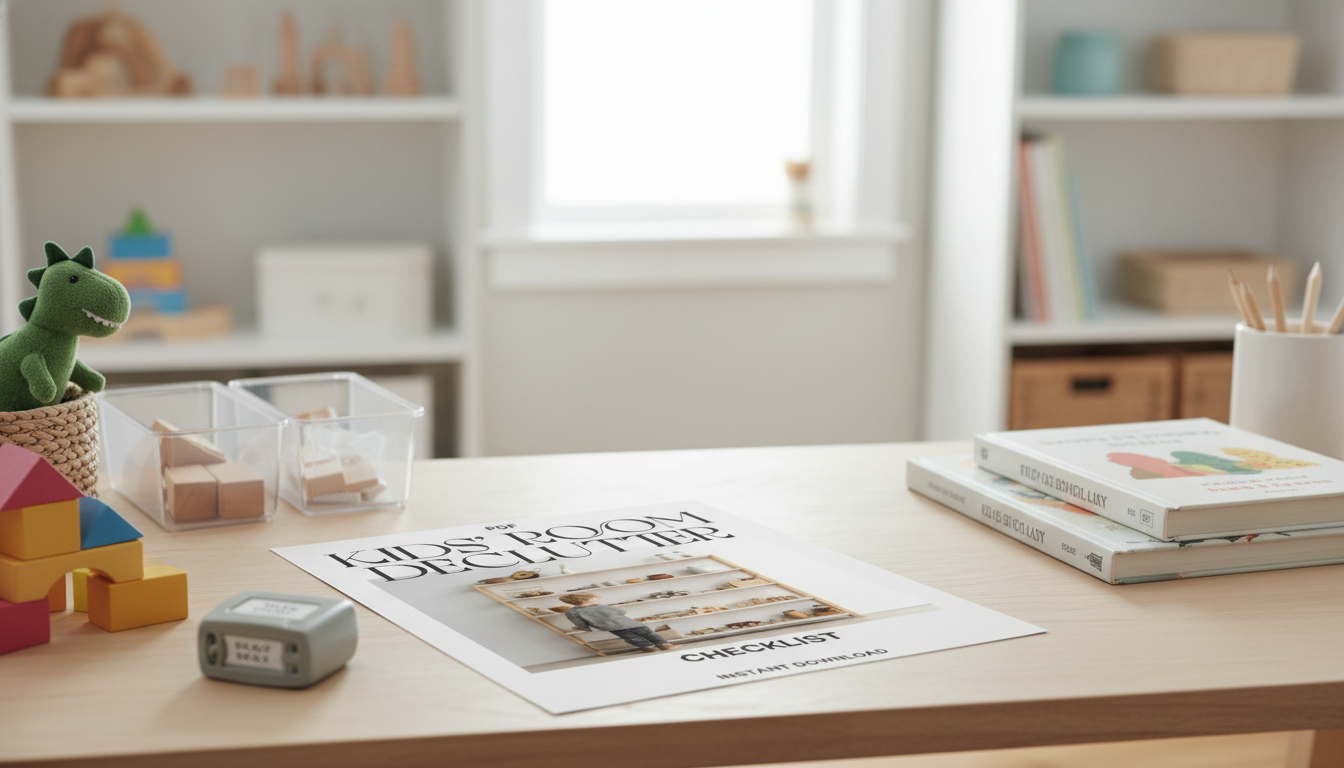
For a structured, family-friendly reset you can reuse, grab the Kids’ Room Declutter Checklist printable digital download. It’s designed for quick zone-by-zone decisions, with a format that works even when energy is low and time is tight.
FAQ
How long does it take to declutter a kids’ room?
A quick reset can take 20 minutes, a typical room is often 60–90 minutes, and a larger or very cluttered room may take 2–4 hours. Time boxing by zone (10–20 minutes each) makes it realistic to finish over a weekend without burnout.
What should be decluttered first in a messy kids’ room?
Start with trash, laundry, and large floor items because the visible progress builds momentum fast. Then move to one contained category—either toys or clothes—so decisions stay simple.
How many toys should a child keep?
Instead of a strict number, use container limits and play frequency: keep what fits in the assigned bins/shelves and is chosen regularly. A rotation system helps kids enjoy more variety while keeping daily cleanup manageable.
Recommended for you


Pocket USB Voice Recorder: Choose 8GB or 32GB
Jun 6, 2026











Leave a comment