-
Shop
- Adidas
- Advanced Technologies
- AI Skills Mastery 2026 Collection
- Astrology & Tarot Products
- Beauty
- Beauty Guides Collection
- Best-Sellers
- Car Accessories
- Confidence
- Dating & Social Skills
- Digital Resources
- AI & Technology
- AI Skills
- Budgeting & Saving
- Car Buying & Ownership
- Cozy Feast Collection
- Electronics & Technology
- Emotional Intelligence
- Entrepreneurship & Business Growth
- Financial Education
- Financial Independence
- Financial Mindset & Psychology
- Goal Setting
- Hobbies
- Home Styling & Organization
- Kitchen & Recipes
- Leadership
- Mindfulness
- Mindset
- Motivation
- Online Business
- Parenting & Child Development
- Pet Lifestyle & Wellness
- Positive Thinking
- Productivity
- Self Confidence
- Sleep Improvement
- Smart Life with AI
- Stress Management & Relaxation
- Travel Planning
- Yoga & Fitness
- Yoga & Mind-Body Practices
- Education & Learning
- Family & Parenting
- Fashion
- Alexander McQueen
- Bags
- Bags & Wallets
- Balenciaga
- Belts
- Blazers
- Bottega Veneta
- Brunello Cucinelli
- Burberry
- Chanel
- Chloé
- Dior
- Dolce & Gabbana
- Dresses
- Etro
- Fendi
- Gucci
- Hats & Hair Accessories
- Hoodies & Sweatshirts
- Jacquemus
- Jil Sander
- Keychains
- Kiton
- Luggage
- Miu Miu
- Off-White
- Outerwear
- Prada
- Rick Owens
- Saint Laurent
- Shoes
- Socks & Tights
- Sweaters & Cardigans
- The Row
- Tom Ford
- Tops & Shirts
- Valentino
- Valentino Garavani
- Versace
- Vivienne Westwood
- Watches
- Fashion Accessories
- Furniture
- Gadgets
- Health & Beauty
- Health & Wellness
- Home & Garden
- Home Supplies
- Jewelry
- Kids & Babies
- Kitchen
- Kitchen Best-Sellers
- Nike
- Patio, Lawn & Garden
- Personal Growth
- Personal Style & Fashion
- Pet Care
- Pet Supplies
- Pets
- Smart Home Living Guides
- Sport & Outdoors
- Stress Relief & Relaxation
- Super Deals
- TikTok Growth & Monetization Mastery
- Travel
- Travel & Adventure
- Wealth
- Wellness
- Popular
- Best deals
Mini Golf Beginner Checklist: Setup, Rules & Quick Tips
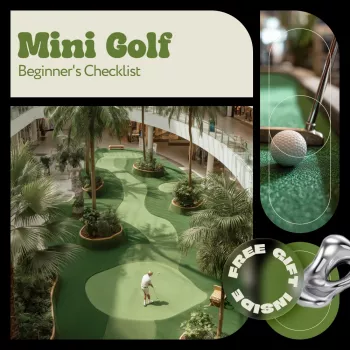
Mini Golf Beginner’s Checklist: Easy Step-by-Step Setup for First-Time Players
Mini golf is easiest when the basics are handled before the first putt: what to bring, how to hold the putter, how turns work, and how to keep pace without stress. This step-by-step checklist is designed for first-time players who want a simple plan—from picking a course to finishing the last hole—and a printable/digital format that can be saved to a phone or printed for a group.
What to know before the first round
Mini golf rewards control more than strength. You’ll be reading slopes, choosing safe lines, and using walls or rails for bank shots—so a smooth roll beats a hard hit almost every time.
- Mini golf is about controlled putting, reading slopes, and managing bounces—not power.
- Most courses provide putters and balls; personal gear is optional but can improve comfort.
- Expect short holes (often par 2–4) with obstacles, ramps, walls, and bank shots.
- Best beginner mindset: aim for a smooth roll and consistent speed rather than perfect aim every time.
If you want an easy reference you can keep on your phone between holes, this Mini Golf Beginner’s Checklist (printable + digital) is a simple one-page way to stay organized without slowing the group down.
Step-by-step checklist: from planning to the first tee
- Pick a time: earlier hours are quieter; evenings can be busier but cooler in summer.
- Choose the right group size: pairs or groups of 3–4 move faster and feel less crowded.
- Check basics before leaving: location, hours, pricing, and whether reservations are needed.
- Wear practical shoes with traction; avoid slippery soles on ramps, bridges, and wet turf.
- Bring a small carry kit: water, sunscreen, bug spray (if outdoors), and a phone for scoring.
- Warm up for 2 minutes: gentle wrist rolls and a few slow practice strokes to find a smooth tempo.
Quick pre-round checklist (print or screenshot)
| Task | Why it matters | Done |
|---|---|---|
| Confirm hours/location | Avoid delays and rushed starts | ☐ |
| Comfortable shoes | Better balance on slopes and obstacles | ☐ |
| Sun/rain plan | Stay comfortable and focused | ☐ |
| Water + small towel | Grip and comfort in heat/humidity | ☐ |
| Scorecard method | Keeps the group moving and organized | ☐ |
On the course: simple rules and smooth group flow
- Decide a turn order at the first hole (random, age order, or “whoever wants to start”).
- Standard flow: everyone putts from the tee area, then continue in order—often the ball farthest from the hole goes next.
- Set a max-stroke limit per hole (commonly 6 or 7) to keep the round fun and moving.
- Pause and reset if a ball leaves the playable area: place it back where it went out or at a course-marked drop spot, following posted rules.
- Keep pace: when finished with a hole, move to the next tee before adding up detailed totals.
Mini golf venues can post their own course rules, but if you’re curious about how golf rules are generally structured, the official rules references from the USGA and The R&A are helpful context.
Beginner putting fundamentals that work on any hole
- Grip: light pressure—tight hands create jerky strokes and inconsistent speed.
- Stance: feet about shoulder-width, eyes over or near the ball, slight knee bend for balance.
- Stroke: pendulum motion with shoulders and arms; minimize wrist flipping.
- Speed first: choose a pace that would reach 1–2 feet past the hole on level ground.
- Aim and alignment: pick a small target (a spot on the turf) rather than aiming “at the hole” vaguely.
- Bank shots: use walls like a backboard; start with gentle angles and moderate speed.
A simple routine that keeps nerves down: set your feet, pick a tiny target spot, take one calm practice stroke, then roll it. If you do that on every hole, your scores usually improve without “thinking harder.”
Reading slopes, ramps, and obstacles (without overthinking)
- Look from behind the ball and behind the hole to see the main slope direction.
- On sloped turf: aim slightly uphill of the hole; the ball will break downhill.
- On ramps: prioritize rolling speed so the ball stays on line; too soft can drift, too hard can jump.
- When an obstacle has a narrow opening: aim for the center and focus on speed control more than perfect alignment.
- If a shot repeatedly fails: switch strategy—bank off a wall, use a safer line, or reduce speed.
One practical trick: if you’re unsure how fast to hit a ramp, watch one player go first and note what the ball does at the top. Then adjust only speed (not your entire stance and grip) on your attempt.
Scoring options that keep it fun for first-time players
Common first-timer mistakes (and quick fixes)
If you’re playing outside in summer heat, a light, breathable top can help you stay comfortable and focused between holes. One simple option is the Jil Sander Short Sleeve V-Neck Shirt.
Printable + digital checklist: what it includes and how to use it
A simple first-round plan (18 holes)
FAQ
Do beginners need to buy a putter or ball for mini golf?
No—most mini golf venues provide putters and balls as part of admission. For a first outing, comfort add-ons (like a small towel, water, or a phone-based scorecard) tend to help more than buying equipment.
What’s a good max-stroke rule for first-time players?
A friendly cap is 6 or 7 strokes per hole. It keeps the pace moving and prevents a single tough obstacle hole from taking the fun out of the round—just agree on the cap before hole 1.
How can a beginner get better quickly in mini golf?
Prioritize speed control and a consistent pendulum stroke, then aim at a small spot rather than “the hole” in general. Learn one reliable bank-shot approach and use it when the direct line looks low-percentage.
Recommended for you


AI Skin Scan Checklist for Sun Damage Tracking
Jul 15, 2026













Leave a comment