-
Shop
- Adidas
- Advanced Technologies
- AI Skills Mastery 2026 Collection
- Astrology & Tarot Products
- Beauty
- Beauty Guides Collection
- Best-Sellers
- Car Accessories
- Confidence
- Dating & Social Skills
- Digital Resources
- AI & Technology
- AI Skills
- Budgeting & Saving
- Car Buying & Ownership
- Cozy Feast Collection
- Electronics & Technology
- Emotional Intelligence
- Entrepreneurship & Business Growth
- Financial Education
- Financial Independence
- Financial Mindset & Psychology
- Goal Setting
- Hobbies
- Home Styling & Organization
- Kitchen & Recipes
- Leadership
- Mindfulness
- Mindset
- Motivation
- Online Business
- Parenting & Child Development
- Pet Lifestyle & Wellness
- Positive Thinking
- Productivity
- Self Confidence
- Sleep Improvement
- Smart Life with AI
- Stress Management & Relaxation
- Travel Planning
- Yoga & Fitness
- Yoga & Mind-Body Practices
- Education & Learning
- Family & Parenting
- Fashion
- Alexander McQueen
- Bags
- Bags & Wallets
- Balenciaga
- Belts
- Blazers
- Bottega Veneta
- Brunello Cucinelli
- Burberry
- Chanel
- Chloé
- Dior
- Dolce & Gabbana
- Dresses
- Etro
- Fendi
- Gucci
- Hats & Hair Accessories
- Hoodies & Sweatshirts
- Jacquemus
- Jil Sander
- Keychains
- Kiton
- Luggage
- Miu Miu
- Off-White
- Outerwear
- Prada
- Rick Owens
- Saint Laurent
- Shoes
- Socks & Tights
- Sweaters & Cardigans
- The Row
- Tom Ford
- Tops & Shirts
- Valentino
- Valentino Garavani
- Versace
- Vivienne Westwood
- Watches
- Fashion Accessories
- Furniture
- Gadgets
- Health & Beauty
- Health & Wellness
- Home & Garden
- Home Supplies
- Jewelry
- Kids & Babies
- Kitchen
- Kitchen Best-Sellers
- Nike
- Patio, Lawn & Garden
- Personal Growth
- Personal Style & Fashion
- Pet Care
- Pet Supplies
- Pets
- Smart Home Living Guides
- Sport & Outdoors
- Stress Relief & Relaxation
- Super Deals
- TikTok Growth & Monetization Mastery
- Travel
- Travel & Adventure
- Wealth
- Wellness
- Popular
- Best deals
KonMari Living Room Joy-Check Toolkit: Declutter Fast

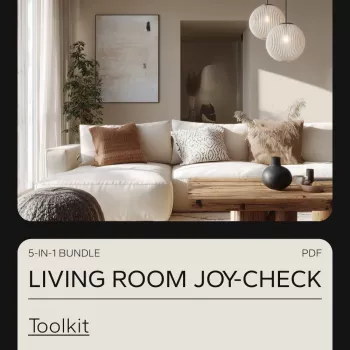
Living Room Joy-Check Toolkit: A KonMari-Style Decluttering Bundle for a Calmer Space
A living room is shared, visible, and easy to let drift into “storage mode.” When every flat surface becomes a drop zone, the room can start feeling more like a holding area than a place to rest, connect, or enjoy hobbies. The Living Room Joy-Check Toolkit: KonMari Decluttering Bundle, eBooks & Guides is built to reset the space with a clear decision process, practical sorting steps, and simple routines that help the room stay enjoyable after the initial tidy-up.
KonMari-style tidying emphasizes intentionality—keeping what supports the life you want at home. If you’d like the method’s core idea in a living-room-friendly format, it helps to start with how the room is meant to feel and function. (For background on the approach, see the KonMari Method overview.)
What the Joy-Check Toolkit Is Designed to Do
This bundle turns a vague goal like “declutter the living room” into a sequence of small, finishable sessions that fit real schedules. Instead of working corner-by-corner (which often just redistributes clutter), you’ll move by category and use prompts that speed up keep/donate/trash decisions—especially for shared items like games, throw blankets, and remotes.
It also helps define what “joy” and “useful” mean specifically for a living room: comfort, hospitality, hobbies, and rest. That clarity reduces the most common friction points—paper piles, décor overload, “miscellaneous” baskets, and kid items that multiply overnight.
Clutter can feel heavier than it looks. A calmer space often supports a calmer mind, and the relationship between clutter and stress is widely discussed by health experts (see Cleveland Clinic’s perspective on clutter and mental health).
Who This Bundle Fits Best
- Apartment and small-home living rooms where every surface becomes a landing pad.
- Families and roommates who need shared rules for shared items (and fewer “Who left this here?” moments).
- Minimalism-curious households that want guidance without extreme rules.
- Anyone restarting after a move, renovation, life change, or a long busy season.
- People who prefer written checklists and guided steps instead of improvising a plan.
A Simple Joy-Check Flow for Living Room Decisions
A reliable flow keeps you from re-litigating every decision. Start with a quick “purpose statement” for the room—hosting friends, family movie nights, reading, quiet evenings, hobbies, or all of the above. Then define a few non-negotiables like clear walkways, seating comfort, easy-to-clean surfaces, and a safe kid zone if needed.
Joy-Check prompts by category
| Category | Joy-check prompt | Common keep rule | Common release rule |
|---|---|---|---|
| Books & magazines | Would this be chosen again today? | Keep favorites and current reads | Release outdated, duplicate, or guilt-reading piles |
| Electronics & remotes | Does it still match current habits? | Keep what is used weekly | Recycle dead cables, extra remotes, obsolete devices |
| Décor | Does it improve the mood of the room? | Keep a curated set that fits the room’s purpose | Release “filler” décor and items without meaning |
| Textiles (blankets/pillows) | Does it add comfort without clutter? | Keep a small rotation that’s easy to store | Release scratchy, stained, never-used extras |
| Games/toys | Is it actually played with here? | Keep what gets used in the living room | Relocate or donate items used elsewhere or outgrown |
| Papers & mail | Does this need action or retention? | Keep only what has a clear next step or legal need | Recycle the rest and stop the pile at the source |
For electronics you’re letting go of, follow a reputable recycling route—especially for batteries and cords. The EPA provides guidance on electronics donation and recycling to help you handle e-waste responsibly.
How to Use the Toolkit in a Weekend (or in 20-Minute Blocks)
Keeping It Tidy: Setups That Prevent Re-Clutter
A small “reward ritual” can help the room stay inviting. Something as simple as a consistent drink-and-reset moment can become the habit trigger—like setting up a tidy end table and enjoying a warm cup in your favorite mug. If you’re refreshing your living room routine, consider adding a cozy staple like the Elegant 280ML Ceramic Coffee Cup with Saucer – Striped Latte & Tea Mug.
What Makes a Digital Decluttering Bundle Worth It
Quick Notes Before Buying
Recommended Add-Ons for a Fresh Start
- Living Room Joy-Check Toolkit: KonMari Decluttering Bundle, eBooks & Guides — the step-by-step structure for sorting, deciding, and resetting.
- Elegant 280ML Ceramic Coffee Cup with Saucer – Striped Latte & Tea Mug — a simple comfort cue for a nightly reset ritual.
- Budget Style Strategy Bundle for Everyday Looks – 5-in-1 Digital Download — a practical companion if part of your “living room clutter” is overflow from clothing and accessories.
FAQ
Does a KonMari-style approach work for a shared living room?
Yes—start by agreeing on the room’s purpose and a few shared rules (what can stay visible vs. what must be stored). Sort by category to keep decisions fair, and use a single pending box for disagreements with a revisit date so the process doesn’t stall.
How long does it take to declutter a living room using a checklist?
A focused first pass often takes 60–180 minutes, while deeper edits (books, décor, and sentimental items) can take a full weekend. Twenty-minute blocks still work well as long as each block ends with a quick reset and donation/trash immediately leaves the room.
What should be decluttered first in the living room?
Start with visible surfaces (tables, console, floor) for fast momentum, then tackle paper before it spreads. After that, move to textiles, décor, and electronics—those categories get easier once the room already feels clearer.
Recommended for you

2-Minute Stress Relief: Calm Tools for Busy Days
Jun 25, 2026












Leave a comment