-
Shop
- Adidas
- Advanced Technologies
- AI Skills Mastery 2026 Collection
- Astrology & Tarot Products
- Beauty
- Beauty Guides Collection
- Best-Sellers
- Car Accessories
- Confidence
- Dating & Social Skills
- Digital Resources
- AI & Technology
- AI Skills
- Budgeting & Saving
- Car Buying & Ownership
- Cozy Feast Collection
- Electronics & Technology
- Emotional Intelligence
- Entrepreneurship & Business Growth
- Financial Education
- Financial Independence
- Financial Mindset & Psychology
- Goal Setting
- Hobbies
- Home Styling & Organization
- Kitchen & Recipes
- Leadership
- Mindfulness
- Mindset
- Motivation
- Online Business
- Parenting & Child Development
- Pet Lifestyle & Wellness
- Positive Thinking
- Productivity
- Self Confidence
- Sleep Improvement
- Smart Life with AI
- Stress Management & Relaxation
- Travel Planning
- Yoga & Fitness
- Yoga & Mind-Body Practices
- Education & Learning
- Family & Parenting
- Fashion
- Alexander McQueen
- Bags
- Bags & Wallets
- Balenciaga
- Belts
- Blazers
- Bottega Veneta
- Brunello Cucinelli
- Burberry
- Chanel
- Chloé
- Dior
- Dolce & Gabbana
- Dresses
- Etro
- Fendi
- Gucci
- Hats & Hair Accessories
- Hoodies & Sweatshirts
- Jacquemus
- Jil Sander
- Keychains
- Kiton
- Luggage
- Miu Miu
- Off-White
- Outerwear
- Prada
- Rick Owens
- Saint Laurent
- Shoes
- Socks & Tights
- Sweaters & Cardigans
- The Row
- Tom Ford
- Tops & Shirts
- Valentino
- Valentino Garavani
- Versace
- Vivienne Westwood
- Watches
- Fashion Accessories
- Furniture
- Gadgets
- Health & Beauty
- Health & Wellness
- Home & Garden
- Home Supplies
- Jewelry
- Kids & Babies
- Kitchen
- Kitchen Best-Sellers
- Nike
- Patio, Lawn & Garden
- Personal Growth
- Personal Style & Fashion
- Pet Care
- Pet Supplies
- Pets
- Smart Home Living Guides
- Sport & Outdoors
- Stress Relief & Relaxation
- Super Deals
- TikTok Growth & Monetization Mastery
- Travel
- Travel & Adventure
- Wealth
- Wellness
- Popular
- Best deals
How to Sleep on a Plane: Long-Haul Rest That Works
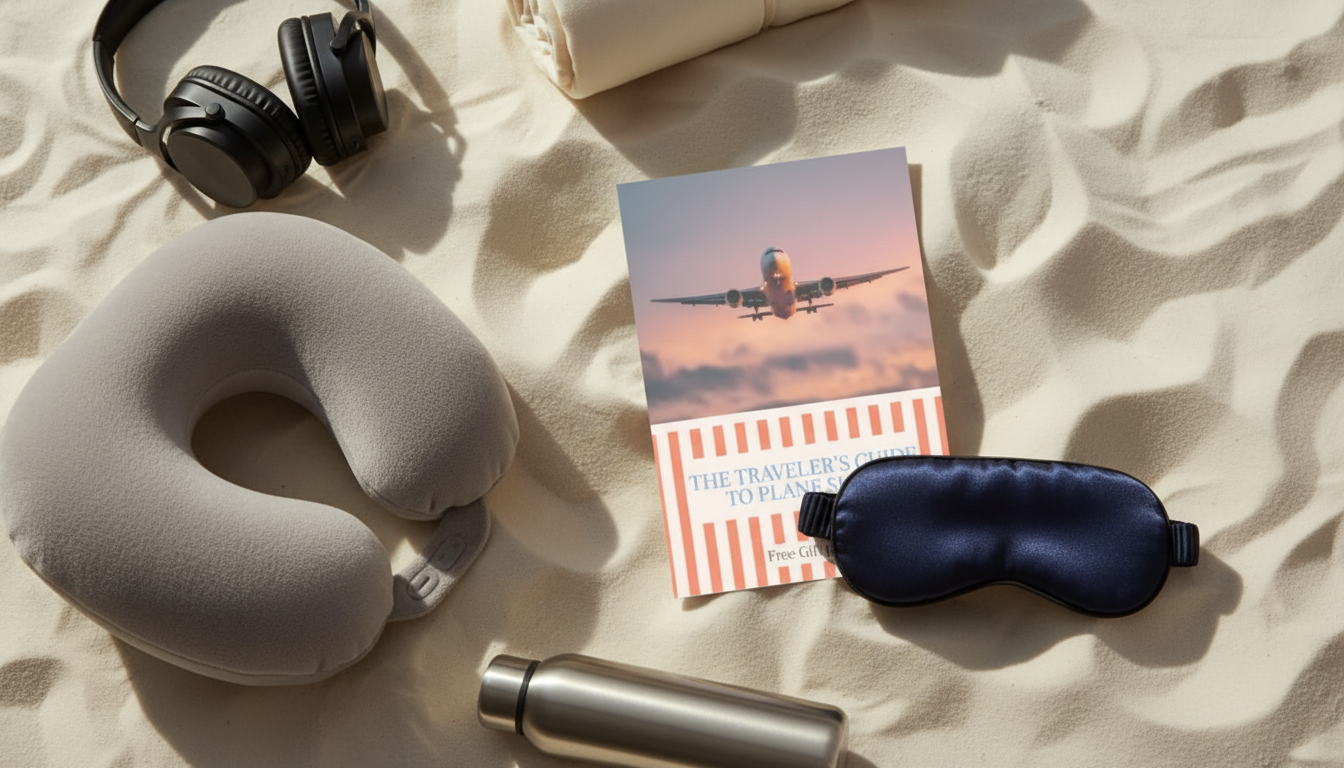
The Traveler’s Guide to Plane Sleep: Rest Better on Long-Haul Flights
Sleeping on a plane can feel like a battle against dry air, engine noise, awkward angles, and shifting time zones. The good news: a few smart choices—made before boarding and refined in the first 30 minutes in your seat—can dramatically improve comfort and rest quality on long-haul flights.
Why plane sleep is so difficult
Even great sleepers at home can struggle in the cabin because the environment is built for transport, not recovery.
- Cabin pressure and low humidity often increase dryness and mild discomfort, which can keep you from fully relaxing.
- Noise, light, and constant micro-interruptions (announcements, service carts, seatmates moving) fragment sleep and shorten deeper stages.
- Upright posture makes it harder for the body to settle into stable, restorative sleep—especially if the head keeps nodding forward.
- Time-zone shifts blur your usual cues for “night,” so your intended bedtime may not match your internal clock.
- Anxiety and screen exposure keep the nervous system alert when you need it to downshift.
Set up for sleep before the trip (24–48 hours out)
Better plane sleep starts before you ever see your boarding group called. A little planning reduces the number of problems you’ll have to solve mid-flight.
- Pick a seat that matches your sleep style: window seats are usually best for leaning and avoiding aisle bumps; aisle seats help if you’ll need frequent bathroom access. When possible, avoid rows near galleys and lavatories.
- Shift your sleep timing gradually: if you’re crossing multiple time zones, move bedtime and wake time by 30–60 minutes per day toward your destination schedule.
- Hydrate earlier and reduce alcohol: dehydration makes you feel worse and can worsen sleep quality, so prioritize water the day before and go easy on drinks.
- Pack a compact “sleep kit”: eye mask, earplugs or noise-canceling headphones, a travel pillow, layers, lip balm, and a small moisturizer.
- Plan caffeine with intention: avoid it within 6–8 hours of your planned sleep window on the flight, then use it strategically when you actually need alertness at your destination.
Quick pre-flight checklist by timeline
| When | Do this | Why it helps |
|---|---|---|
| 48–24 hours | Adjust bedtime/wake time slightly toward destination | Eases circadian shock |
| Day of flight | Hydrate and eat a balanced meal | Stabilizes energy and comfort |
| At the airport | Limit alcohol; moderate caffeine | Reduces dehydration and sleep disruption |
| Before boarding | Set phone to destination time; pick a sleep window | Creates a clear sleep plan |
| Carry-on | Sleep kit at the top of the bag | Prevents fumbling and delays |
The first 30 minutes on board: build a sleep-friendly “micro-environment”
Those first minutes in your seat matter more than most people realize. The goal is to reduce stimulation and lock in comfort before the cabin gets busy.
- Lower stimulation fast: dim screens, skip bright overhead lights, and switch to calm audio (ambient noise, a familiar audiobook, or gentle music).
- Fix comfort at the source: use a folded jacket for lumbar support, loosen anything restrictive (waistbands, laces), and add socks or a light layer before you feel cold.
- Block the senses: an eye mask handles overhead glare; earplugs or noise-canceling headphones reduce the constant hum that keeps sleep shallow.
- Prevent neck collapse: the biggest “sleep killer” is the chin tipping forward. Choose support that keeps the head stable—side support for leaning, or structured support that keeps your neck neutral.
- Make a bathroom plan: go before your sleep window begins so you’re not forced to break sleep 45 minutes after drifting off.
How to time sleep on a long-haul flight
Timing is less about perfection and more about aligning your effort with the destination clock.
For jet lag basics and destination-time strategies, reputable overviews from the CDC and the Sleep Foundation can help you map your sleep and light exposure to local time.
Comfort tactics that actually work in economy seating
Calming the nervous system when sleep feels impossible
A practical, step-by-step plan for the next long-haul flight
Recommended travel tools (digital)
- The Traveler’s Guide to Plane Sleep: How to Sleep Well on a Long Haul Flight eBook for Restful Travel ($16.99) — a focused, portable guide with realistic steps for economy seating, plus checklists you can follow while traveling.
- Portable USB Voice Recorder & Digital Audio Sound Recorder with 8GB/32GB Storage ($9.82) — useful for storing offline calming audio or a simple spoken wind-down routine when Wi-Fi is unreliable.
FAQ
What is the best seat for sleeping on a long-haul flight?
A window seat is usually the easiest for sleep because you can lean, control your light exposure better, and you’re less likely to be bumped by aisle traffic. Choose an aisle seat if you expect frequent bathroom trips, and try to avoid rows near galleys and lavatories where noise and movement are higher.
Should caffeine be avoided entirely before a flight?
Caffeine doesn’t have to be eliminated, but timing matters. Avoid it within about 6–8 hours of your planned sleep window on the plane, then use it strategically when you need to stay alert for the destination morning—especially if you’re sensitive to stimulants.
How can jet lag be reduced if sleep on the plane doesn’t happen?
Align your behavior to destination time: seek light when it’s morning there, keep meals on a local schedule, stay hydrated, and use short naps (not long daytime sleeps) to take the edge off. Even if you can’t sleep, quiet rest with eyes closed and slow breathing helps you arrive more functional.
Recommended for you

Deep Autumn Test: 5 Signs You’re Dark Autumn
Aug 4, 2026












Leave a comment