-
Shop
- Adidas
- Advanced Technologies
- AI Skills Mastery 2026 Collection
- Astrology & Tarot Products
- Beauty
- Beauty Guides Collection
- Best-Sellers
- Car Accessories
- Confidence
- Dating & Social Skills
- Digital Resources
- AI & Technology
- AI Skills
- Budgeting & Saving
- Car Buying & Ownership
- Cozy Feast Collection
- Electronics & Technology
- Emotional Intelligence
- Entrepreneurship & Business Growth
- Financial Education
- Financial Independence
- Financial Mindset & Psychology
- Goal Setting
- Hobbies
- Home Styling & Organization
- Kitchen & Recipes
- Leadership
- Mindfulness
- Mindset
- Motivation
- Online Business
- Parenting & Child Development
- Pet Lifestyle & Wellness
- Positive Thinking
- Productivity
- Self Confidence
- Sleep Improvement
- Smart Life with AI
- Stress Management & Relaxation
- Travel Planning
- Yoga & Fitness
- Yoga & Mind-Body Practices
- Education & Learning
- Family & Parenting
- Fashion
- Alexander McQueen
- Bags
- Bags & Wallets
- Balenciaga
- Belts
- Blazers
- Bottega Veneta
- Brunello Cucinelli
- Burberry
- Chanel
- Chloé
- Dior
- Dolce & Gabbana
- Dresses
- Etro
- Fendi
- Gucci
- Hats & Hair Accessories
- Hoodies & Sweatshirts
- Jacquemus
- Jil Sander
- Keychains
- Kiton
- Luggage
- Miu Miu
- Off-White
- Outerwear
- Prada
- Rick Owens
- Saint Laurent
- Shoes
- Socks & Tights
- Sweaters & Cardigans
- The Row
- Tom Ford
- Tops & Shirts
- Valentino
- Valentino Garavani
- Versace
- Vivienne Westwood
- Watches
- Fashion Accessories
- Furniture
- Gadgets
- Health & Beauty
- Health & Wellness
- Home & Garden
- Home Supplies
- Jewelry
- Kids & Babies
- Kitchen
- Kitchen Best-Sellers
- Nike
- Patio, Lawn & Garden
- Personal Growth
- Personal Style & Fashion
- Pet Care
- Pet Supplies
- Pets
- Smart Home Living Guides
- Sport & Outdoors
- Stress Relief & Relaxation
- Super Deals
- TikTok Growth & Monetization Mastery
- Travel
- Travel & Adventure
- Wealth
- Wellness
- Popular
- Best deals
Diecast Construction Vehicles: Crane, Dozer, Excavator
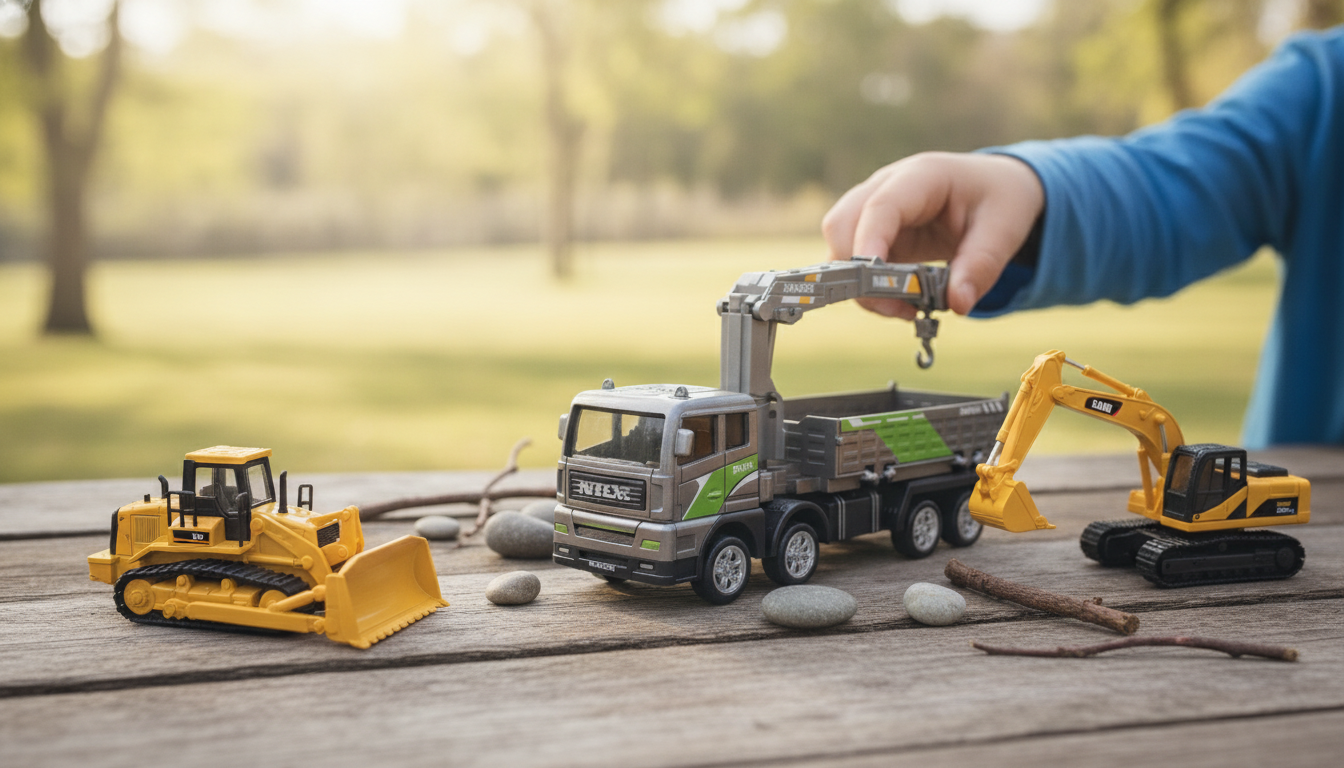
Diecast Construction Vehicles: Big Worksite Fun in a Small Fleet
Diecast construction vehicles bring the sights and motions of a busy worksite into playtime—lifting, scooping, pushing, and hauling with satisfying weight and detail. Whether it’s a crane carefully lowering “steel beams” (blocks) into place or an excavator repeating the perfect scoop-and-dump loop, these machines naturally invite kids to build stories, solve little problems, and stay engaged longer. Below is a practical guide to choosing a diecast engineering set, understanding how each vehicle plays, and setting up a mini worksite that fits your child’s age, space, and play style.
What Makes Diecast Construction Vehicles So Engaging
Diecast construction toys stand out because they feel more like “real equipment” in the hand. That extra heft often translates into a more satisfying push across the floor and better resilience during repeated jobsite missions.
- Durable, heavier feel: Compared with many all-plastic toys, diecast vehicles tend to tolerate daily play and frequent “crashes” more confidently.
- Mechanical play patterns: Boom raising, bucket curling, blade pushing, and smooth rolling encourage longer sessions because kids can repeat actions and improve control.
- Realistic details: Cabs, paint, wheels/tracks, and recognizable shapes help kids connect play to real machines and build vocabulary.
- Easy to share: Group play is simple because roles split naturally—one child digs, another hauls, another lifts, and someone “inspects” the site.
Meet the Machines: Crane, Bulldozer, Excavator, and More
A balanced construction set feels like a tiny crew: each vehicle has a job, and the fun comes from coordinating the jobs into a “project.” Here’s how the most common machines tend to play.
- Crane: Best for lift-and-lower games, moving small blocks, and creating a “build zone” on a rug, play mat, or sand table. It adds anticipation—kids slow down and aim.
- Bulldozer: Ideal for pushing gravel, kinetic sand, or small piles into tidy mounds. The blade action supports cause-and-effect play and whole-arm coordination.
- Excavator: A favorite for scoop-and-dump routines. Positioning the boom/arm/bucket builds fine motor control and sequencing (extend, lower, scoop, lift, swing, dump).
- Other worksite vehicles (set-dependent): Dump trucks for hauling and tipping, loaders for fast scoops, and rollers for smoothing “roads” and flattening play sand.
How to Choose the Right Set for Age, Space, and Play Style
The “best” set is the one that matches how and where your child actually plays. A few quick checkpoints make it easier to pick something that gets used often.
- Age suitability: Always confirm the manufacturer’s recommended age. Younger kids generally do better with chunkier vehicles, simpler joints, and fewer detachable accessories.
- Play environment: Indoor hard floors favor rolling vehicles and haul routes. Sand, dirt, or sensory bins are perfect for scoop-and-push machines.
- Hands-on features: If play value matters most, prioritize functional joints (arm movement, bucket tilt, rotating cab) over purely decorative detail.
- Scale and size: Smaller vehicles store easily and pair well with play mats; larger vehicles are easier to grip and create more dramatic movement.
- Noise and surface protection: Metal on hard floors can be louder. A rug, foam mat, or tray helps protect surfaces and keeps sand contained.
Quick Comparison of Vehicle Roles and Play Benefits
If you’re deciding between one “hero” machine and a small fleet, think in terms of roles. Mixing a digger (excavator) + pusher (bulldozer) + lifter (crane) creates varied play loops without needing lots of pieces.
Common Construction Vehicles: What They Do and Why Kids Love Them
| Vehicle | Primary action | Best play materials | Skills encouraged |
|---|---|---|---|
| Crane | Lift, swing, lower | Blocks, small loads, pretend beams | Planning, patience, hand-eye coordination |
| Excavator | Dig, scoop, dump | Kinetic sand, soil, sensory bins | Fine motor control, sequencing, problem-solving |
| Bulldozer | Push, level, clear | Sand, small piles, pebbles (supervised) | Gross motor control, cause-and-effect, spatial awareness |
| Dump truck (if included) | Haul and tip | Sand, small toys, blocks | Imaginative play, sorting, repetitive motion mastery |
| Loader (if included) | Fast scoop and carry | Sand, small blocks, beads (age-appropriate) | Coordination, speed control, task switching |
Safety and Durability Checks That Matter
For additional guidance, review the Consumer Product Safety Commission (CPSC) toy safety resources, the ASTM F963 toy safety standard, and the American Academy of Pediatrics choking prevention guidance.
Play Ideas: Turn Any Corner into a Mini Worksite
Featured Option: Diecast Engineering Construction Toy Vehicles Set
If you want realistic worksite action without taking up much storage space, Diecast Engineering Construction Toy Vehicles – Crane, Bulldozer, Excavator & More is a compact way to build a small fleet with multiple roles. It works well for gifting, rainy-day play, and quick setups that still feel “busy” because kids can dig, push, lift, and haul in the same scene.
More in-stock picks to round out gifting
- Elegant 280ML Ceramic Coffee Cup with Saucer – Striped Latte & Tea Mug (a practical add-on for the grown-up supervising the jobsite)
- Deep Autumn Wardrobe Made Easy: Your Ultimate Guide to Deep Autumn Color Palette Clothing (a digital gift option if you’re pairing toys with something for an older sibling or parent)
Care Tips to Keep the Fleet Rolling
FAQ
Are diecast construction vehicles safe for toddlers?
Focus on the manufacturer’s age recommendation. Toddlers typically do best with larger vehicles, fewer detachable parts, and close supervision around moving joints and any small accessories.
What’s the best construction vehicle for kids who love digging?
An excavator is usually the top pick for digging play because the boom, arm, and bucket motions support repeated scoop-and-dump routines in sand or sensory bins.
How can diecast vehicles be used indoors without damaging floors?
Use a rug, foam mat, or tray-based play area to soften contact and contain mess. Keep rough sand and grit out of wheels and avoid metal scraping by setting up a designated worksite zone.
Recommended for you
Beginner Travel Vlogging Gear Checklist (Pack Light)
Jun 19, 2026













Leave a comment