-
Shop
- Adidas
- Advanced Technologies
- AI Skills Mastery 2026 Collection
- Astrology & Tarot Products
- Beauty
- Beauty Guides Collection
- Best-Sellers
- Car Accessories
- Confidence
- Dating & Social Skills
- Digital Resources
- AI & Technology
- AI Skills
- Budgeting & Saving
- Car Buying & Ownership
- Cozy Feast Collection
- Electronics & Technology
- Emotional Intelligence
- Entrepreneurship & Business Growth
- Financial Education
- Financial Independence
- Financial Mindset & Psychology
- Goal Setting
- Hobbies
- Home Styling & Organization
- Kitchen & Recipes
- Leadership
- Mindfulness
- Mindset
- Motivation
- Online Business
- Parenting & Child Development
- Pet Lifestyle & Wellness
- Positive Thinking
- Productivity
- Self Confidence
- Sleep Improvement
- Smart Life with AI
- Stress Management & Relaxation
- Travel Planning
- Yoga & Fitness
- Yoga & Mind-Body Practices
- Education & Learning
- Family & Parenting
- Fashion
- Alexander McQueen
- Bags
- Bags & Wallets
- Balenciaga
- Belts
- Blazers
- Bottega Veneta
- Brunello Cucinelli
- Burberry
- Chanel
- Chloé
- Dior
- Dolce & Gabbana
- Dresses
- Etro
- Fendi
- Gucci
- Hats & Hair Accessories
- Hoodies & Sweatshirts
- Jacquemus
- Jil Sander
- Keychains
- Kiton
- Luggage
- Miu Miu
- Off-White
- Outerwear
- Prada
- Rick Owens
- Saint Laurent
- Shoes
- Socks & Tights
- Sweaters & Cardigans
- The Row
- Tom Ford
- Tops & Shirts
- Valentino
- Valentino Garavani
- Versace
- Vivienne Westwood
- Watches
- Fashion Accessories
- Furniture
- Gadgets
- Health & Beauty
- Health & Wellness
- Home & Garden
- Home Supplies
- Jewelry
- Kids & Babies
- Kitchen
- Kitchen Best-Sellers
- Nike
- Patio, Lawn & Garden
- Personal Growth
- Personal Style & Fashion
- Pet Care
- Pet Supplies
- Pets
- Smart Home Living Guides
- Sport & Outdoors
- Stress Relief & Relaxation
- Super Deals
- TikTok Growth & Monetization Mastery
- Travel
- Travel & Adventure
- Wealth
- Wellness
- Popular
- Best deals
Calm Within the Chaos: Relax Your Mind (PDF Download)
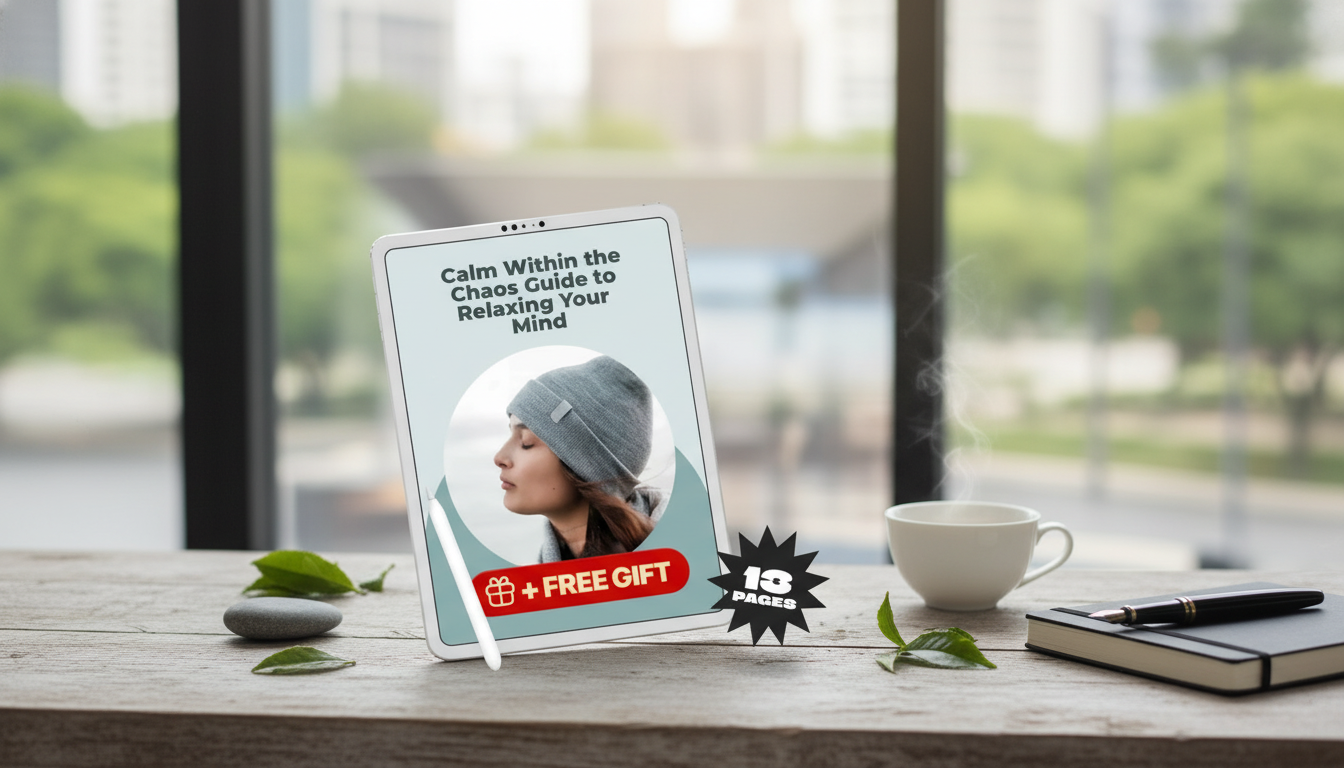
Calm Within the Chaos: A Practical Guide to Relaxing Your Mind (Digital Download PDF)
Calm doesn’t require perfect circumstances—it requires reliable tools. This digital download guide is designed to help settle racing thoughts, ease mental tension, and build small, repeatable relaxation habits that fit real life. Use it for quick resets during stressful moments or as a structured routine to support steadier days.
What “mental relaxation” looks like in everyday life
Mental relaxation is less about “turning your brain off” and more about lowering the volume. A calmer mind often shows up as fewer looping thoughts, easier transitions between tasks, and a gentler inner dialogue when things don’t go as planned.
Relaxation can be physical (slower breathing, looser muscles, less tightness in the jaw) and mental (less rumination, clearer focus, and fewer worst-case stories playing on repeat). For most people, progress is gradual—small, consistent practices tend to work better than occasional long sessions that are hard to repeat.
Why stress makes the mind feel loud
Stress can keep the nervous system in a “high alert” state, making it harder to shift into rest-and-recover mode. When urgency becomes the default, the brain stays on the lookout for the next problem—real or imagined.
Common signs include shallow breathing, tension in the shoulders or jaw, irritability, trouble concentrating, and difficulty falling asleep. Relaxation skills create a deliberate “downshift,” helping your body exit the emergency setting so your thinking can become steadier and more flexible. For a deeper overview of stress and coping strategies, the American Psychological Association’s stress resources offer a helpful foundation.
Quick calm techniques (pick one and start today)
Short practices can interrupt spirals before they build momentum. The goal isn’t to do everything—it’s to do something small, on purpose, and often enough that your body learns the cue.
To make the habit easier, pair one technique with a predictable moment: first coffee, after commuting, before opening email, or right after brushing your teeth at night. If one method doesn’t click, switch. Relaxation is personal, and variety improves follow-through.
Fast ways to relax your mind
| Time | Technique | How to do it | Best for |
|---|---|---|---|
| 1–2 min | Breathing reset | Inhale through the nose, exhale longer than the inhale; repeat slowly | Racing thoughts, pre-meeting nerves |
| 2–5 min | Body scan | Move attention from head to toes, softening tension as it’s noticed | Tension, restlessness |
| 3–7 min | Grounding with senses | Name a few things seen/heard/felt to reconnect with the present moment | Overwhelm, worry spirals |
| 5–10 min | Journaling “brain dump” | Write worries/tasks without organizing; then circle what’s controllable | Mental clutter, bedtime rumination |
| 10–15 min | Gentle stretching | Slow neck/shoulder/hip stretches while breathing steadily | Physical stress, desk fatigue |
What’s included in the Calm Within the Chaos digital download
Calm Within the Chaos Guide to Relaxing Your Mind (PDF download) is a structured, practical PDF focused on repeatable relaxation tools rather than complicated theory. It’s designed to help you build a personal “menu” of techniques—quick resets for stressful moments, longer wind-downs for evenings, and supportive habits that make calm easier to access.
The format is flexible for busy schedules: use a single page when you need it, or follow a simple routine when you want more structure. If you’re also building a soothing environment for your wind-down time, warm lighting can help signal “slow down” at night; the Luxury Retro French Romantic Copper Crystal Wall Lamp is one option for creating a calmer corner without relying on harsh overhead light.
How to use the PDF for best results
Start small: choose one exercise and repeat it daily for a week before adding more. That repetition matters because your nervous system learns through consistency, not intensity. Decide your “minimum,” too—even two minutes counts. A brief practice that happens most days will usually outperform a longer routine that only happens when life is already quiet.
Track what changes so you can keep what actually works: sleep quality, mood, focus, patience, or how quickly you recover after getting irritated. Then keep the PDF accessible—saved to your phone or tablet, or printed with a few pages placed where you’ll see them. If meditation is part of your plan, the National Center for Complementary and Integrative Health provides a clear, research-informed overview of meditation approaches and what they can support.
Who this guide fits (and when to seek extra support)
This guide is helpful for people managing daily stress, mental overload, work-life pressure, or difficulty unwinding at night. It pairs well with supportive basics like movement, steady hydration, sleep hygiene, and reducing caffeine later in the day.
If anxiety or stress feels unmanageable, persistent, or starts affecting safety, relationships, or basic functioning, consider professional support from a qualified clinician. When you want a broader list of evidence-based relaxation methods, Mayo Clinic’s relaxation techniques is a solid reference to explore alongside your daily practice.
Simple weekly plan to build a calmer baseline
If you’d like a simple “comfort routine” to support your habits—especially if you’re practicing in the evening—comfortable basics can remove friction. The Calvin Klein Jeans Light Blue Cotton T-shirt for Men is an easy, breathable option for lounging, stretching, or winding down without feeling restricted.
FAQ
Is this a physical product or a digital download?
This is a downloadable PDF guide. No physical item ships, and you can save it to your phone, tablet, or computer (or print selected pages).
How quickly can the techniques help calm a racing mind?
Some methods can feel calming within minutes, especially breathing and grounding. Longer-lasting change usually comes from practicing consistently over days and weeks.
Can this guide replace therapy or medical care?
No. It’s intended for education and self-care support, not professional diagnosis or treatment. If symptoms feel severe, persistent, or disruptive, seek help from a qualified healthcare professional.














Leave a comment