-
Shop
- Adidas
- Advanced Technologies
- AI Skills Mastery 2026 Collection
- Astrology & Tarot Products
- Beauty
- Beauty Guides Collection
- Best-Sellers
- Car Accessories
- Confidence
- Dating & Social Skills
- Digital Resources
- AI & Technology
- AI Skills
- Budgeting & Saving
- Car Buying & Ownership
- Cozy Feast Collection
- Electronics & Technology
- Emotional Intelligence
- Entrepreneurship & Business Growth
- Financial Education
- Financial Independence
- Financial Mindset & Psychology
- Goal Setting
- Hobbies
- Home Styling & Organization
- Kitchen & Recipes
- Leadership
- Mindfulness
- Mindset
- Motivation
- Online Business
- Parenting & Child Development
- Pet Lifestyle & Wellness
- Positive Thinking
- Productivity
- Self Confidence
- Sleep Improvement
- Smart Life with AI
- Stress Management & Relaxation
- Travel Planning
- Yoga & Fitness
- Yoga & Mind-Body Practices
- Education & Learning
- Family & Parenting
- Fashion
- Alexander McQueen
- Bags
- Bags & Wallets
- Balenciaga
- Belts
- Blazers
- Bottega Veneta
- Brunello Cucinelli
- Burberry
- Chanel
- Chloé
- Dior
- Dolce & Gabbana
- Dresses
- Etro
- Fendi
- Gucci
- Hats & Hair Accessories
- Hoodies & Sweatshirts
- Jacquemus
- Jil Sander
- Keychains
- Kiton
- Luggage
- Miu Miu
- Off-White
- Outerwear
- Prada
- Rick Owens
- Saint Laurent
- Shoes
- Socks & Tights
- Sweaters & Cardigans
- The Row
- Tom Ford
- Tops & Shirts
- Valentino
- Valentino Garavani
- Versace
- Vivienne Westwood
- Watches
- Fashion Accessories
- Furniture
- Gadgets
- Health & Beauty
- Health & Wellness
- Home & Garden
- Home Supplies
- Jewelry
- Kids & Babies
- Kitchen
- Kitchen Best-Sellers
- Nike
- Patio, Lawn & Garden
- Personal Growth
- Personal Style & Fashion
- Pet Care
- Pet Supplies
- Pets
- Smart Home Living Guides
- Sport & Outdoors
- Stress Relief & Relaxation
- Super Deals
- TikTok Growth & Monetization Mastery
- Travel
- Travel & Adventure
- Wealth
- Wellness
- Popular
- Best deals
Whole House Reset Deep Clean: Room-by-Room Checklist
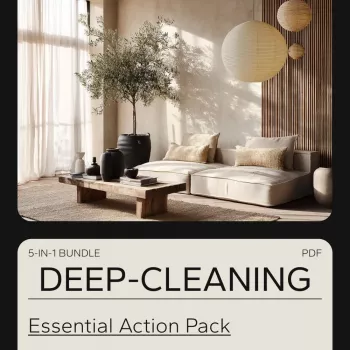
The Essential Deep-Cleaning Action Pack: A Whole House Reset Plan
A whole house reset works best when it’s structured: gather the right supplies, move room by room, and use a repeatable checklist that tackles dust, grime, odors, and overlooked zones. This plan breaks the reset into clear phases, time blocks, and a practical sequence that helps avoid re-cleaning the same areas.
What a “whole house reset” actually covers
A deep clean isn’t the same as a tidy-up. Tidying is putting items away and wiping what you can see; a reset targets buildup and “edges”: baseboards, vents, door frames, fixture seams, cabinet fronts, and fabrics that hold odor and dust.
The goal is a cleaner baseline you can maintain: reduced dust load, sanitized high-touch points, refreshed textiles, and fewer hidden “grime traps” that make rooms feel stale. The simplest rule set is also the most reliable: work top-to-bottom, dry-to-wet, and clean-to-dirty so you don’t knock debris onto freshly cleaned surfaces.
Before you begin, pick your scope. Some homes can do a weekend reset; others are better served by a staged plan over 5–10 days (especially with kids, pets, or heavy clutter).
Prep: supplies, safety, and a simple staging system
Build a portable cleaning caddy
Keep your core tools together so you’re not hunting for supplies mid-task: microfiber cloths, a scrub brush, a sponge, gloves, trash bags, vacuum attachments (crevice + brush), and mop pads. A small caddy turns the reset into a smooth loop instead of a stop-and-start project.
Use a 3-bin method in each room
Set up three containers (or bags): Keep, Relocate, Donate/Discard. This prevents clutter from slowing you down and stops “I’ll deal with this later” piles from migrating to clean rooms.
Ventilation and product safety
Open windows when using strong cleaners, and never mix bleach with ammonia or acids. For disinfecting best practices and safe use guidance, refer to the CDC’s cleaning and disinfecting recommendations. For choosing safer product options, the EPA Safer Choice program is a helpful reference point.
Start a laundry pipeline early
Begin a load right away (rags, bath mats, removable covers, or bedding) so textiles finish while you’re deep-cleaning other areas. That overlap is what makes a reset feel fast.
Quick “before” photos
Snap a picture of trouble spots (stove buildup, shower door haze, grout lines). It’s a simple way to confirm progress and avoid over-scrubbing areas that are improving gradually.
The recommended order (so clean areas stay clean)
Sequence matters because dust and debris travel. A room order that reduces backtracking looks like this:
- Bedrooms first: quick visual wins and easy declutter; fresh linens set the tone.
- Bathrooms next: higher sanitizing priority; let dwell-time products work while you swap tasks.
- Kitchen after that: degreasing and food-safe surfaces; finish with floors.
- Living areas and entry last: you’ll catch dust migration and tracked-in dirt at the end.
- Always end each room with floors: vacuum edges first, then wet mop if needed.
Whole house reset timeline: choose a pace that fits
You can scale a reset to the time you actually have:
- Two-hour sprint: hit high-touch points, visible grime, and floors in the main areas.
- One-day reset: add appliance exteriors, shower descaling, key-room baseboards, and a linen refresh.
- Two-day reset: add inside appliances, interior cabinet fronts, window tracks/sills, and upholstery vacuuming.
- Staged reset: assign one deep zone per day (kitchen appliances, bathroom grout, bedroom textiles, etc.).
Room-by-Room Reset Checklist (Suggested Order and Time Blocks)
| Area | Top Priorities | Estimated Time |
|---|---|---|
| Bedrooms | Strip beds, launder linens, dust high-to-low, wipe switches/handles, vacuum edges and under bed | 45–90 min per room |
| Bathrooms | Pre-treat shower/tub, scrub fixtures, sanitize toilet, clean mirror, wash mats, mop floors | 45–75 min each |
| Kitchen | Declutter counters, degrease stovetop, sanitize sink, wipe cabinet fronts, clean appliance exteriors, mop | 90–150 min |
| Living/Entry | Dust vents/shelves, vacuum upholstery, wipe remotes/handles, tidy shoes/coats, vacuum and mop | 60–120 min |
| Whole-home finishes | Take out trash, replace liners, restock soap/paper, final air-out and quick visual scan | 20–40 min |
Room-by-room deep-clean steps (fast, repeatable sequence)
Bedrooms
Bathrooms
Kitchen
Living areas
Entryways
Overlooked spots that make a reset feel “complete” (without hours of extra work)
Make it easier next time: a maintenance rhythm after the reset
Action pack option for a guided reset
- The Essential Deep-Cleaning Action Pack: How to Do a Whole House Reset
- 70″ Suede Leather Sofa with Tufted Design (a reset is a great time to re-evaluate high-use seating and keep upholstery vacuuming in your routine)
- Jil Sander Short Sleeve V-Neck Shirt (a comfortable, easy-to-move-in option for longer cleaning blocks)
FAQ
How long does a whole house reset take?
A fast sprint can take about 2 hours if you focus on high-touch points and floors. A one-day reset often fits into 6–10 hours, while a two-day deep clean may take 10–16+ hours depending on home size, clutter level, and whether you’re cleaning inside appliances and cabinets.
What should be cleaned first during a deep clean?
Start top-to-bottom and dry-to-wet (dusting and vacuuming before wiping and mopping). Many homes do best starting with bedrooms for quick wins, then bathrooms for hygiene, then the kitchen, ending each room with floors.
How often should a whole house deep clean be done?
For most households, a whole-home deep clean every 3–6 months (or seasonally) is a practical cadence. Between resets, monthly zone-based deep cleaning helps—especially with pets, allergies, young kids, or frequent cooking.















Leave a comment