-
Shop
- Adidas
- Advanced Technologies
- AI Skills Mastery 2026 Collection
- Astrology & Tarot Products
- Beauty
- Beauty Guides Collection
- Best-Sellers
- Car Accessories
- Confidence
- Dating & Social Skills
- Digital Resources
- AI & Technology
- AI Skills
- Budgeting & Saving
- Car Buying & Ownership
- Cozy Feast Collection
- Electronics & Technology
- Emotional Intelligence
- Entrepreneurship & Business Growth
- Financial Education
- Financial Independence
- Financial Mindset & Psychology
- Goal Setting
- Hobbies
- Home Styling & Organization
- Kitchen & Recipes
- Leadership
- Mindfulness
- Mindset
- Motivation
- Online Business
- Parenting & Child Development
- Pet Lifestyle & Wellness
- Positive Thinking
- Productivity
- Self Confidence
- Sleep Improvement
- Smart Life with AI
- Stress Management & Relaxation
- Travel Planning
- Yoga & Fitness
- Yoga & Mind-Body Practices
- Education & Learning
- Family & Parenting
- Fashion
- Alexander McQueen
- Bags
- Bags & Wallets
- Balenciaga
- Belts
- Blazers
- Bottega Veneta
- Brunello Cucinelli
- Burberry
- Chanel
- Chloé
- Dior
- Dolce & Gabbana
- Dresses
- Etro
- Fendi
- Gucci
- Hats & Hair Accessories
- Hoodies & Sweatshirts
- Jacquemus
- Jil Sander
- Keychains
- Kiton
- Luggage
- Miu Miu
- Off-White
- Outerwear
- Prada
- Rick Owens
- Saint Laurent
- Shoes
- Socks & Tights
- Sweaters & Cardigans
- The Row
- Tom Ford
- Tops & Shirts
- Valentino
- Valentino Garavani
- Versace
- Vivienne Westwood
- Watches
- Fashion Accessories
- Furniture
- Gadgets
- Health & Beauty
- Health & Wellness
- Home & Garden
- Home Supplies
- Jewelry
- Kids & Babies
- Kitchen
- Kitchen Best-Sellers
- Nike
- Patio, Lawn & Garden
- Personal Growth
- Personal Style & Fashion
- Pet Care
- Pet Supplies
- Pets
- Smart Home Living Guides
- Sport & Outdoors
- Stress Relief & Relaxation
- Super Deals
- TikTok Growth & Monetization Mastery
- Travel
- Travel & Adventure
- Wealth
- Wellness
- Popular
- Best deals
Weird Roadside Attractions in the USA: Best Detours
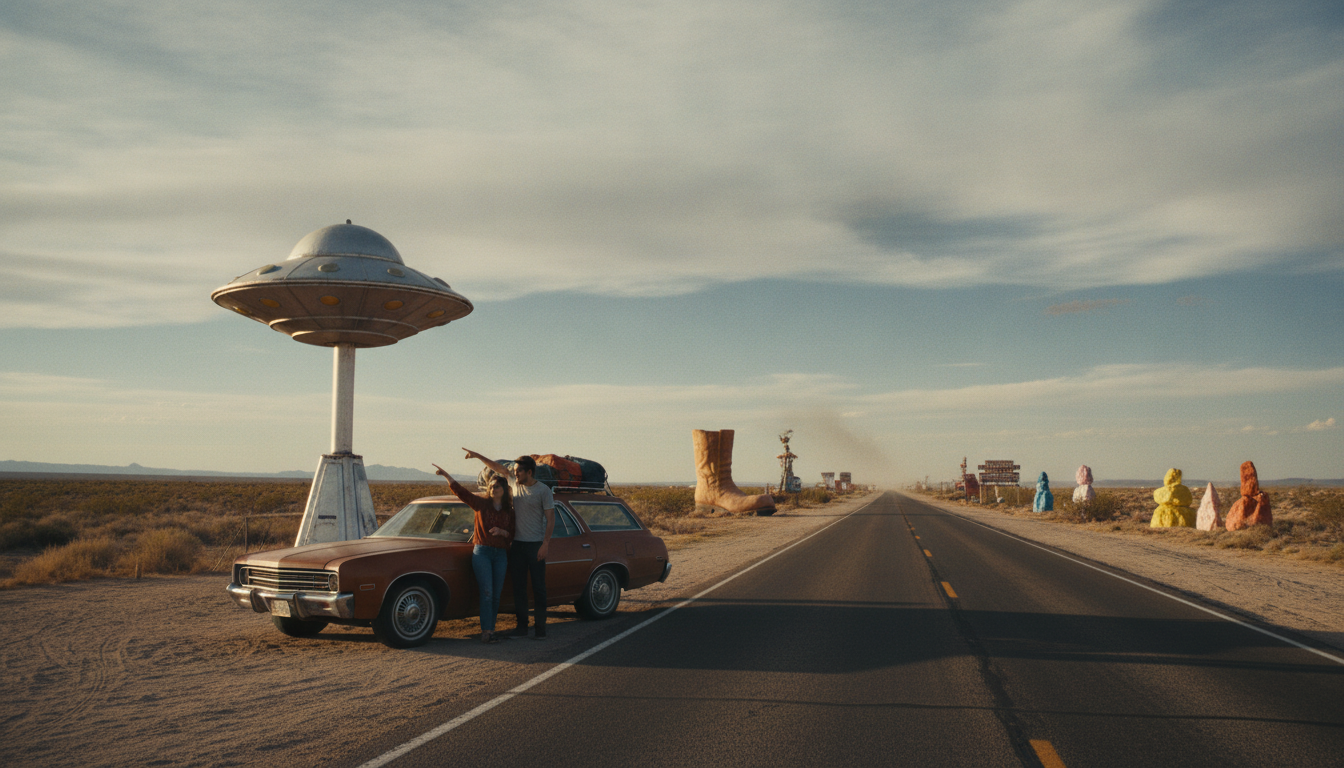
America’s Weird and Wonderful Roadside Stops: A Guide to Offbeat and Unforgettable Destinations
Road trips are better with detours—especially the kind that lead to giant sculptures, mysterious museums, and small-town oddities that feel like discovered secrets. The best roadside attractions deliver a quick burst of delight, a story you can’t wait to tell, and photos that make the drive feel legendary. Below is a practical guide to planning standout stops across the US, keeping your day smooth, and packing so the weirdness stays fun (not stressful).
What Makes a Roadside Stop Truly Unforgettable
Not every “attraction” deserves a hard brake and a U-turn. The most memorable roadside stops tend to share a few qualities:
- Visual wow factor: oversized art, unusual architecture, or striking landscapes you can spot from the road.
- A story worth repeating: local legends, quirky founders, historic moments, or unexpected collections.
- Quick-access fun: easy parking, short walks, and a satisfying visit in 15–90 minutes.
- Photo-friendly details: distinctive signage, murals, props, and viewpoints that don’t require a long hike.
- A nearby bonus: diners, antique shops, scenic pullouts, or short trails that round out the stop.
If you’re on the fence, a fast way to decide is to ask: “Will we still be talking about this at dinner?” If yes, it’s probably worth the detour.
Classic Categories of Offbeat Roadside Attractions
America’s roadside charm comes in familiar flavors—each with its own kind of payoff.
- World’s biggest things: statues, foods, tools, animals, and roadside icons built for pure spectacle.
- Odd museums and collections: niche exhibits featuring everything from local eccentric history to hyper-specific hobbies.
- Route-era landmarks: neon motels, vintage gas stations, and mid-century drive-in culture holdouts.
- Nature’s weirdness: lava fields, petrified wood, salt flats, geysers, and strange rock formations with quick trails.
- Interactive kitsch: mystery spots, tilted houses, mirror mazes, and hands-on illusion exhibits.
To add a little credibility to your quick nature detours, browse park hours and alerts through the National Park Service before you roll in—closures and heat advisories can change a “short walk” fast.
A Quick-Plan Map: Sample Stops by Region (Mix-and-Match)
Instead of chasing one perfect attraction, build a day with variety: one “anchor” stop plus a couple of quick hits along the same corridor.
- Northeast: eccentric museums, historic oddities, and neon pockets near coastal highways.
- South: legendary roadside food shrines, folk-art parks, and larger-than-life mascots.
- Midwest: giant sculptures, quirky small-town museums, and classic highway photo ops.
- Southwest: desert art installations, alien-themed towns, and dramatic geology pullouts.
- West: coastal oddities, redwood wonders, and retro attractions with big postcard energy.
Tip: pair one “big” stop with two short spontaneous stops per day to avoid attraction fatigue.
Roadside stop planner (time, vibe, and who it’s best for)
| Stop type | Typical time | Best for | What to look for | Pro tip |
|---|---|---|---|---|
| Giant landmark/photo op | 10–25 min | Families, quick detours | Safe pull-off, clear signage, strong backdrop | Arrive early for empty photos |
| Quirky museum/collection | 45–90 min | Curious travelers | Unique theme, guided stories, small gift shop | Check last entry time |
| Scenic nature pullout | 20–60 min | Hikers, photographers | Short loop trails, viewpoints, shade/wind exposure | Pack water even for “short” walks |
| Mystery/illusion attraction | 30–75 min | Groups, rainy days | Hands-on exhibits, timed tours | Book ahead on weekends |
| Food landmark + souvenir | 30–60 min | Everyone | Regional specialty, clean restrooms, local merch | Split portions to sample more stops |
For drive-time reality checks—traffic, weather, and how long that “quick detour” actually takes—tools like AAA Road Trip Planning can help you keep the day from running long.
How to Turn Detours Into a Smooth Day (Not a Chaotic One)
- Set a detour budget: cap “off-route” time (try 60–90 minutes total per day) so you still arrive before dark.
- Batch stops by corridor: pick attractions clustered near one exit or town, rather than zig-zagging between highways.
- Check access details: hours, seasonal closures, tour times, and pet rules before you commit.
- Plan for parking realities: tight lots can be a dealbreaker for trailers, rooftop boxes, and oversized vehicles.
- Keep a comfort kit: sun protection, water, snacks, wipes, and a phone charger for photo-heavy stops.
- Balance the day: alternate indoor/outdoor stops and include at least one sit-down break.
When you need inspiration that’s more “curated gem” than “random pin,” a quick scroll through Smithsonian Magazine – Travel can spark detour-worthy ideas—especially for history-tinged oddities.
Spotlight Guide: America’s Weird and Wonderful Roadside Stops (Book)
If you like the idea of detours but don’t want to spend hours researching, a dedicated guide can make planning feel effortless. America’s Weird and Wonderful Roadside Stops: The Best Roadside Attractions in the US – A Guide to Offbeat and Unforgettable Destinations is built for travelers who want memorable landmarks, unusual museums, and photo-worthy icons without turning a road trip into a spreadsheet.
For a practical road-trip extra, consider packing a comfortable top that transitions from car hours to souvenir shops and diners, like the Jil Sander Short Sleeve V-Neck Shirt.
Roadside Stop Etiquette and Safety That Keeps Places Open
FAQ
How many roadside attractions should be planned in one day?
Plan 1–2 main stops plus 1–3 quick photo ops, then adjust for total drive time, daylight, and everyone’s energy. Add buffer time for parking, lines, and unexpected “we’re hungry” breaks.
Are roadside attractions usually kid-friendly?
Most are, especially giant landmarks and hands-on illusion exhibits. It’s still smart to check age appropriateness, accessibility, and restroom availability before committing to a longer detour.
What should be packed for quick detours and spontaneous stops?
Bring water, sunscreen, hats, comfortable shoes, wipes, snacks, a portable charger, small cash, and a light layer for wind or strong A/C. Even short stops are better when everyone stays comfortable.















Leave a comment