-
Shop
- Adidas
- Advanced Technologies
- AI Skills Mastery 2026 Collection
- Astrology & Tarot Products
- Beauty
- Beauty Guides Collection
- Best-Sellers
- Car Accessories
- Confidence
- Dating & Social Skills
- Digital Resources
- AI & Technology
- AI Skills
- Budgeting & Saving
- Car Buying & Ownership
- Cozy Feast Collection
- Electronics & Technology
- Emotional Intelligence
- Entrepreneurship & Business Growth
- Financial Education
- Financial Independence
- Financial Mindset & Psychology
- Goal Setting
- Hobbies
- Home Styling & Organization
- Kitchen & Recipes
- Leadership
- Mindfulness
- Mindset
- Motivation
- Online Business
- Parenting & Child Development
- Pet Lifestyle & Wellness
- Positive Thinking
- Productivity
- Self Confidence
- Sleep Improvement
- Smart Life with AI
- Stress Management & Relaxation
- Travel Planning
- Yoga & Fitness
- Yoga & Mind-Body Practices
- Education & Learning
- Family & Parenting
- Fashion
- Alexander McQueen
- Bags
- Bags & Wallets
- Balenciaga
- Belts
- Blazers
- Bottega Veneta
- Brunello Cucinelli
- Burberry
- Chanel
- Chloé
- Dior
- Dolce & Gabbana
- Dresses
- Etro
- Fendi
- Gucci
- Hats & Hair Accessories
- Hoodies & Sweatshirts
- Jacquemus
- Jil Sander
- Keychains
- Kiton
- Luggage
- Miu Miu
- Off-White
- Outerwear
- Prada
- Rick Owens
- Saint Laurent
- Shoes
- Socks & Tights
- Sweaters & Cardigans
- The Row
- Tom Ford
- Tops & Shirts
- Valentino
- Valentino Garavani
- Versace
- Vivienne Westwood
- Watches
- Fashion Accessories
- Furniture
- Gadgets
- Health & Beauty
- Health & Wellness
- Home & Garden
- Home Supplies
- Jewelry
- Kids & Babies
- Kitchen
- Kitchen Best-Sellers
- Nike
- Patio, Lawn & Garden
- Personal Growth
- Personal Style & Fashion
- Pet Care
- Pet Supplies
- Pets
- Smart Home Living Guides
- Sport & Outdoors
- Stress Relief & Relaxation
- Super Deals
- TikTok Growth & Monetization Mastery
- Travel
- Travel & Adventure
- Wealth
- Wellness
- Popular
- Best deals
Positive Thinking Checklist for Young Adults (Daily Reset)

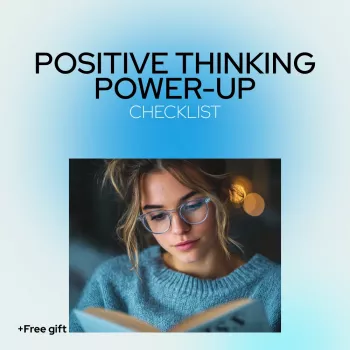
Your Positive Thinking Power-Up Checklist – A Motivational Guide for Young Adults
Positive thinking isn’t about pretending everything is perfect; it’s a set of repeatable habits that help young adults respond to stress, setbacks, and uncertainty with more clarity and confidence. A checklist approach makes mindset work practical: quick prompts, small actions, and simple reflections that build consistency over time—especially on busy school, work, or “figuring it out” days.
If you want a ready-to-use format you can copy into notes, print, or keep on your phone, the Your Positive Thinking Power-Up Checklist – A Motivational Guide for Young Adults is built for fast check-ins and real-life follow-through.
What a “power-up” mindset looks like in real life
A “power-up” mindset doesn’t erase difficult emotions—it helps you move through them without getting stuck. It looks like:
- Noticing negative self-talk without immediately believing it.
- Reframing challenges as specific problems with specific next steps.
- Choosing supportive routines (sleep, movement, boundaries) that stabilize mood.
- Using encouragement that is realistic: “This is hard, and I can take one step.”
- Tracking small wins to build evidence of progress.
This approach aligns with evidence-based skills often used in stress coping and cognitive behavioral strategies (see resources from the American Psychological Association and the NHS CBT overview).
Who this checklist helps most
- Students balancing deadlines, exams, and social pressure.
- First-job and early-career adults navigating feedback and imposter feelings.
- Anyone stuck in a loop of procrastination, comparison, or “all-or-nothing” thinking.
- People who want structure without a long, time-consuming routine.
- Young adults building confidence, communication skills, and self-trust.
It’s especially useful on “messy” days—when motivation is low, time is tight, or emotions feel loud. A checklist helps you do the next helpful thing without negotiating with yourself for an hour.
The core habits inside a positive thinking checklist
Most mindset tools work better when they’re small, repeatable, and connected to action. These core habits keep it simple:
- “Name it to tame it” check-in: identify the main feeling and what triggered it.
- Reality check prompt: what is known, what is assumed, what is controllable.
- One reframing question: what would be a kinder, more accurate way to describe this situation.
- A micro-action: one task that takes 2–10 minutes to create momentum.
- A social reset option: text someone supportive, or ask for help with a specific request.
When stress spikes, pairing emotional awareness with a small action step is often more stabilizing than trying to “think positive” your way out of it. For additional coping guidance, the National Institute of Mental Health offers practical mental health and stress-care resources.
Daily Power-Up Checklist (simple, repeatable, flexible)
Use the morning items when motivation is low and the evening items when the day felt heavy. Pick 3–5 items to start; consistency beats intensity. Keep prompts short enough to do on the worst day, not just the best day.
| Moment | Checklist item | Time | Why it helps |
|---|---|---|---|
| Morning | Write one sentence: “Today, success looks like…” | 1 min | Creates a realistic target and reduces overwhelm |
| Morning | Two-minute breath reset (slow exhale) | 2 min | Downshifts stress response and improves focus |
| Midday | Replace one harsh thought with a neutral reframe | 2 min | Builds cognitive flexibility without forced positivity |
| Midday | Micro-win task (email, tidy, outline, prep) | 5–10 min | Generates momentum and confidence through action |
| Evening | List 3 things that went okay (even small) | 2 min | Trains attention toward evidence of progress |
| Evening | Plan the first step for tomorrow | 2 min | Reduces morning anxiety and decision fatigue |
To make this even easier, keep your checklist visible where decisions happen: the lock screen, a sticky note by your desk, or the first page of your planner. If you like digital downloads that are designed to be reused, the Your Positive Thinking Power-Up Checklist – A Motivational Guide for Young Adults is a quick plug-in for school days, workdays, and reset days.
Motivational prompts that don’t feel cheesy
- “What’s one thing I can do with the energy I have?”
- “If my friend were in my situation, what would I say to them?”
- “What part of this is temporary, and what part is actionable?”
- “What does ‘good enough’ look like today?”
- “What’s the next right step—not the whole plan?”
These prompts work because they reduce pressure. They don’t demand instant confidence—they guide you toward steadier self-talk and a single doable move.
How to use the guide without burning out
What makes this checklist-style guide different
For days when confidence is tied to presentation (interviews, first meetings, presentations), pairing mindset tools with simple “ready-to-go” systems can help. The Budget Style Strategy Bundle for Everyday Looks – 5-in-1 Digital Download offers a practical structure for outfits the same way a checklist offers structure for thoughts—fewer decisions, more follow-through.
A gentle 14-day challenge to make it stick
FAQ
Does positive thinking mean ignoring negative emotions?
No—healthy positivity includes acknowledging what you feel, validating it, and then choosing a helpful response. It’s more about reframing and coping skills than pretending everything is fine.
How long should a daily checklist take to be effective?
Start with 5–10 minutes total or just 3–5 items. The most effective checklist is the one you can repeat consistently, with a low-energy version for rough days.
What if I miss a day or can’t stay consistent?
Restart the next day without “making up” missed time, and shrink the checklist until it feels doable again. Using a simple if–then rule (if you spiral, then do one grounding action and one micro-task) can help you get back on track.
Recommended for you


Roomy Tote-to-Crossbody Handbag for Women (Everyday)
Jun 26, 2026













Leave a comment