-
Shop
- Adidas
- Advanced Technologies
- AI Skills Mastery 2026 Collection
- Astrology & Tarot Products
- Beauty
- Beauty Guides Collection
- Best-Sellers
- Car Accessories
- Confidence
- Dating & Social Skills
- Digital Resources
- AI & Technology
- AI Skills
- Budgeting & Saving
- Car Buying & Ownership
- Cozy Feast Collection
- Electronics & Technology
- Emotional Intelligence
- Entrepreneurship & Business Growth
- Financial Education
- Financial Independence
- Financial Mindset & Psychology
- Goal Setting
- Hobbies
- Home Styling & Organization
- Kitchen & Recipes
- Leadership
- Mindfulness
- Mindset
- Motivation
- Online Business
- Parenting & Child Development
- Pet Lifestyle & Wellness
- Positive Thinking
- Productivity
- Self Confidence
- Sleep Improvement
- Smart Life with AI
- Stress Management & Relaxation
- Travel Planning
- Yoga & Fitness
- Yoga & Mind-Body Practices
- Education & Learning
- Family & Parenting
- Fashion
- Alexander McQueen
- Bags
- Bags & Wallets
- Balenciaga
- Belts
- Blazers
- Bottega Veneta
- Brunello Cucinelli
- Burberry
- Chanel
- Chloé
- Dior
- Dolce & Gabbana
- Dresses
- Etro
- Fendi
- Gucci
- Hats & Hair Accessories
- Hoodies & Sweatshirts
- Jacquemus
- Jil Sander
- Keychains
- Kiton
- Luggage
- Miu Miu
- Off-White
- Outerwear
- Prada
- Rick Owens
- Saint Laurent
- Shoes
- Socks & Tights
- Sweaters & Cardigans
- The Row
- Tom Ford
- Tops & Shirts
- Valentino
- Valentino Garavani
- Versace
- Vivienne Westwood
- Watches
- Fashion Accessories
- Furniture
- Gadgets
- Health & Beauty
- Health & Wellness
- Home & Garden
- Home Supplies
- Jewelry
- Kids & Babies
- Kitchen
- Kitchen Best-Sellers
- Nike
- Patio, Lawn & Garden
- Personal Growth
- Personal Style & Fashion
- Pet Care
- Pet Supplies
- Pets
- Smart Home Living Guides
- Sport & Outdoors
- Stress Relief & Relaxation
- Super Deals
- TikTok Growth & Monetization Mastery
- Travel
- Travel & Adventure
- Wealth
- Wellness
- Popular
- Best deals
Interview Confidence Checklist: Prepare, Perform, Recover
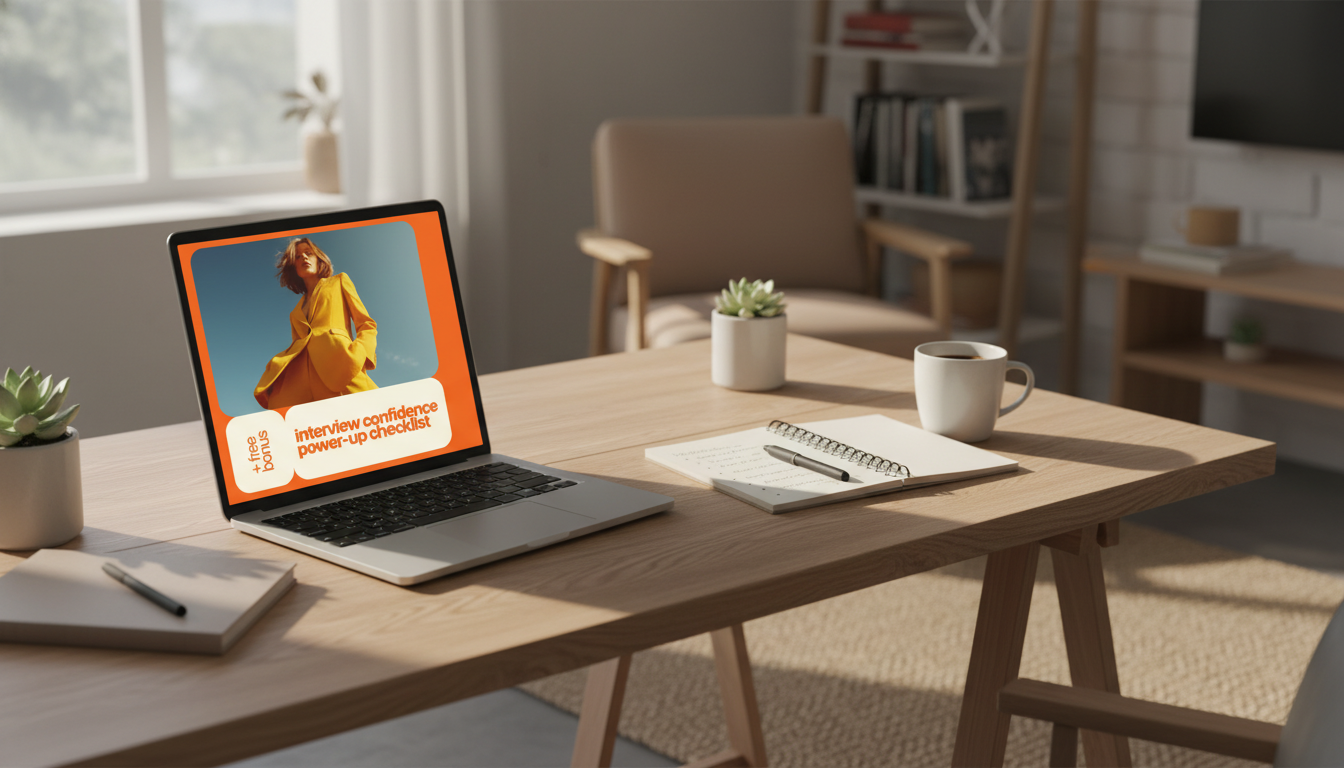
Interview Confidence Power-Up Checklist: From Nervous to Nailed It
Confidence in an interview rarely shows up by accident—it’s built through repeatable steps. The goal isn’t to erase nerves; it’s to turn that energy into calm, focused performance. The checklist approach works because it replaces “hope I feel ready” with a plan you can follow every time: preparation that reduces uncertainty, a simple routine that steadies your delivery, and quick resets that prevent one awkward moment from taking over.
What “interview confidence” looks like in the room
Confident candidates don’t always feel fearless—they look and sound reliable. These are the cues interviewers tend to register quickly:
- Clear, steady pacing: speaking slightly slower than normal, pausing after questions, and finishing thoughts without rushing.
- Grounded presence: feet planted, shoulders relaxed, hands visible, and minimal fidgeting.
- Answer control: responding with a structure (problem → action → result) rather than rambling or apologizing.
- Curiosity and composure: asking thoughtful questions and handling surprises without spiraling.
- A calm “reset” ability: recovering quickly after a stumble and continuing with the next question.
That last point matters more than most people realize: confidence isn’t never stumbling—it’s recovering smoothly.
A simple confidence framework: prepare, perform, recover
1) Prepare: reduce uncertainty
Most interview anxiety is uncertainty wearing a loud coat. Reduce it with role research, a “story bank” of examples, and practice out loud until your opening lines feel familiar.
2) Perform: rely on a short routine
Instead of waiting to “feel confident,” use a consistent pre-interview routine (breathing + posture + first-answer plan). A repeatable routine is a shortcut to steadiness when adrenaline spikes.
3) Recover: don’t let one moment become a spiral
Recover quickly with micro-resets: pause, sip water, repeat the question, or ask for a second to think. Keep your focus on controllables—clarity, examples, tone, and questions—rather than guessing what the interviewer is thinking.
For practical stress basics, the American Psychological Association’s overview of stress is a helpful reference point, and the NHS breathing exercises are an easy way to practice calm on demand.
The confidence power-up timeline (7 days to 10 minutes before)
Use this timeline as your “no-panicking-needed” plan. It prevents last-minute improvising, especially when time pressure makes anxiety louder.
| When | Do this | Why it works |
|---|---|---|
| 7 days before | Build a story bank: 2 wins, 1 challenge, 1 conflict, 1 leadership moment, 1 learning moment | Reduces “blank mind” risk and makes answers faster |
| 2–3 days before | Practice out loud with STAR (Situation–Task–Action–Result) and trim to 60–90 seconds | Creates muscle memory and keeps answers concise |
| 24 hours before | Confirm time zone, location/link, interviewer names, and prepare 3 tailored questions | Removes preventable stress spikes |
| 60 minutes before | Eat/drink lightly, review only bullet notes, arrive early | Stabilizes energy and prevents frantic cramming |
| 10 minutes before | Box breathing (4–4–4–4) + posture reset + choose one “anchor thought” | Downshifts nerves and improves vocal steadiness |
Anchor thought examples: “Be clear, not perfect.” “Slow is smooth.” “One question at a time.” Choose one and stick to it.
Answer patterns that sound confident (even when nervous)
- Lead with a headline: start with one sentence—“The short version is…”—then deliver the story. This signals control.
- Use a default structure: context (1–2 lines) → actions (3–5 lines) → measurable result (1–2 lines).
- Replace fillers with pauses: silence reads as composure; filler words read as uncertainty.
- Swap apologies for clarity: instead of “Sorry, I’m nervous,” use “Let me think for a second.”
- Prepare proof points: keep 3 pieces of evidence ready for your key claims (speed, quality, leadership, revenue, customer impact).
If you want a quick benchmark on common pitfalls and how strong candidates structure responses, Harvard Business Review’s interviewing guidance is a solid resource: HBR on interviewing.
Body language and voice cues that quietly boost authority
- Posture: shoulders down, chest open, chin neutral—avoid leaning back (disengaged) or collapsing (uncertain).
- Eye contact: use a steady rhythm; for video, look at the camera when delivering key points.
- Hands: keep them visible; use small, controlled gestures to emphasize outcomes.
- Voice: end sentences with a downward tone; avoid turning statements into questions.
- Speed control: aim for 10–15% slower than usual when adrenaline is high.
A practical test: record a 60-second answer. If you sound rushed, add pauses after the question and before your result line.
Confidence for job seekers and aspiring entrepreneurs: adapt the same checklist
Job seekers: mirror priorities with real examples
Pull the job description apart and match your stories to the priorities behind it—collaboration, execution, customer focus, ownership. Confidence rises when your examples feel “custom-fit,” not generic.
Aspiring entrepreneurs: show ownership and learning speed
Close strong in 20 seconds
Make it effortless with a ready-to-use digital checklist
- Interview Confidence Power-Up Checklist – How to Have Confidence in an Interview, From Nervous to Nailed It Digital Checklist for Job Seekers & Aspiring Entrepreneurs
- Budget Style Strategy Bundle for Everyday Looks – 5-in-1 Digital Download
- Calvin Klein Jeans Light Blue Cotton T-shirt for Men
FAQ
How can confidence be built quickly before an interview?
Use a short routine: a 10-minute breathing reset, a posture cue (shoulders down, feet planted), and a practiced first-answer script. Then rely on 6–8 prepared stories so your brain isn’t searching from scratch under pressure.
What if the mind goes blank during an interview?
Pause, take a sip of water, and repeat the question out loud to buy a few seconds. Then answer with a simple structure (context → action → result) and pull from a go-to story that can be adapted to multiple questions.
How can nervousness be turned into a confident tone?
Slow your pace and replace filler words with quiet pauses. End statements with a downward tone, and use a headline-first opener (“The short version is…”) to sound decisive even if you feel jittery.
Recommended for you

Pocket USB Voice Recorder: Choose 8GB or 32GB
Jun 6, 2026
Mindful Makeup Ritual: Glow with Intention Daily
Jun 7, 2026













Leave a comment