-
Shop
- Adidas
- Advanced Technologies
- AI Skills Mastery 2026 Collection
- Astrology & Tarot Products
- Beauty
- Beauty Guides Collection
- Best-Sellers
- Car Accessories
- Confidence
- Dating & Social Skills
- Digital Resources
- AI & Technology
- AI Skills
- Budgeting & Saving
- Car Buying & Ownership
- Cozy Feast Collection
- Electronics & Technology
- Emotional Intelligence
- Entrepreneurship & Business Growth
- Financial Education
- Financial Independence
- Financial Mindset & Psychology
- Goal Setting
- Hobbies
- Home Styling & Organization
- Kitchen & Recipes
- Leadership
- Mindfulness
- Mindset
- Motivation
- Online Business
- Parenting & Child Development
- Pet Lifestyle & Wellness
- Positive Thinking
- Productivity
- Self Confidence
- Sleep Improvement
- Smart Life with AI
- Stress Management & Relaxation
- Travel Planning
- Yoga & Fitness
- Yoga & Mind-Body Practices
- Education & Learning
- Family & Parenting
- Fashion
- Alexander McQueen
- Bags
- Bags & Wallets
- Balenciaga
- Belts
- Blazers
- Bottega Veneta
- Brunello Cucinelli
- Burberry
- Chanel
- Chloé
- Dior
- Dolce & Gabbana
- Dresses
- Etro
- Fendi
- Gucci
- Hats & Hair Accessories
- Hoodies & Sweatshirts
- Jacquemus
- Jil Sander
- Keychains
- Kiton
- Luggage
- Miu Miu
- Off-White
- Outerwear
- Prada
- Rick Owens
- Saint Laurent
- Shoes
- Socks & Tights
- Sweaters & Cardigans
- The Row
- Tom Ford
- Tops & Shirts
- Valentino
- Valentino Garavani
- Versace
- Vivienne Westwood
- Watches
- Fashion Accessories
- Furniture
- Gadgets
- Health & Beauty
- Health & Wellness
- Home & Garden
- Home Supplies
- Jewelry
- Kids & Babies
- Kitchen
- Kitchen Best-Sellers
- Nike
- Patio, Lawn & Garden
- Personal Growth
- Personal Style & Fashion
- Pet Care
- Pet Supplies
- Pets
- Smart Home Living Guides
- Sport & Outdoors
- Stress Relief & Relaxation
- Super Deals
- TikTok Growth & Monetization Mastery
- Travel
- Travel & Adventure
- Wealth
- Wellness
- Popular
- Best deals
Electric Coffee Grinder Guide: Grind Size, Burr vs Blade
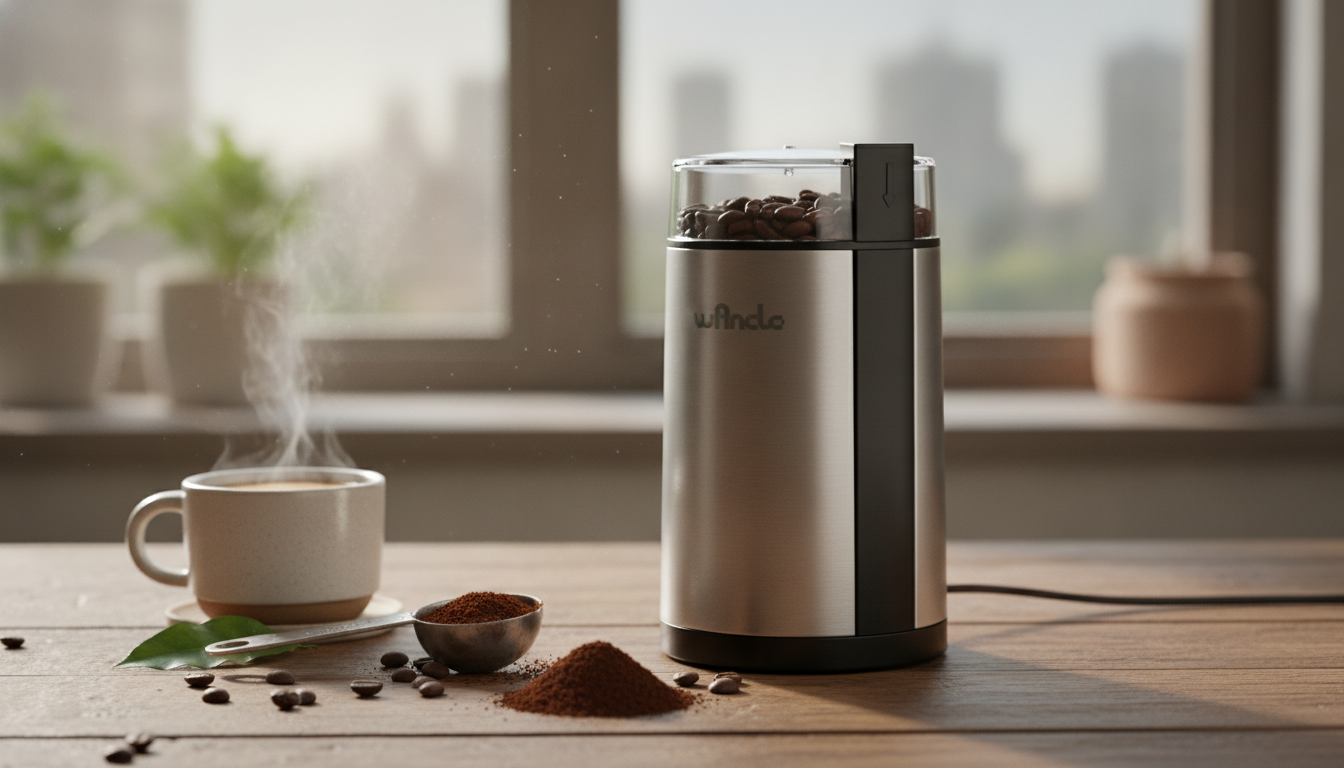
Electric Coffee Grinder: Consistent Grounds for Better Coffee at Home
Freshly ground coffee can noticeably change aroma, flavor clarity, and brew repeatability. An electric coffee grinder makes it easier to dial in grind size for different methods—espresso, pour-over, drip, French press—while saving time compared with manual grinding. Below is a practical guide to grinder types, the features that most affect taste and consistency, and simple habits that lead to a cleaner, more even grind day to day.
Why grind consistency matters
When coffee particles are closer in size, water moves through them more predictably. That consistency shows up in the cup as better balance and less “mystery” from brew to brew.
- More even extraction: Similar particle sizes help water extract flavors at a similar rate, reducing harsh bitterness from fines and sourness from boulders.
- Repeatable results: Consistent grind settings make troubleshooting easier—when a brew tastes off, changing one variable at a time becomes straightforward.
- Better method matching: Using the right grind size helps avoid slow drawdowns in pour-over or weak cups in French press.
- Fresher flavor: Grinding right before brewing limits oxidation and aroma loss that accelerates after coffee is ground.
Electric grinder types and what they’re good at
Electric grinders generally fall into two camps: blade and burr. They can both make coffee, but they behave very differently when you start chasing consistency.
- Blade grinders: Typically lower cost and compact, but they create a mix of powdery fines and larger chunks. They can be “good enough” for basic drip or cold brew where precision is less critical, but results vary.
- Burr grinders: Crush beans between two burrs to produce more uniform grounds. They’re generally preferred for pour-over and especially espresso, where small changes in grind size noticeably shift flow rate.
- Conical burr vs. flat burr: Conical burrs are often quieter and forgiving; flat burrs can emphasize clarity and uniformity but may cost more and may highlight differences between coffees more sharply.
- Dose style: Hopper-fed grinders are convenient for frequent brewing. Single-dose grinding supports freshness and makes it easier to switch beans without leftovers mixing into the next cup.
Quick grind-size guide by brew method
| Brew method | Typical grind | What to watch for | Simple adjustment cue |
|---|---|---|---|
| Espresso | Fine | Channeling, fast shots | Go finer if shots run fast; coarser if choking |
| Pour-over (V60/Chemex) | Medium-fine to medium | Stalled drawdown, muddy bed | Go coarser if drawdown slows; finer if watery |
| Auto drip | Medium | Flat taste or bitterness | Finer for more strength; coarser if bitter |
| French press | Coarse | Sludge, over-extraction | Go coarser if silty; shorter steep if bitter |
| Cold brew | Coarse | Cloudy concentrate | Coarser for clarity; reduce agitation |
Features that make an electric coffee grinder easier to live with
A grinder can produce decent grounds and still feel frustrating day to day if the workflow is messy, loud, or hard to maintain. These practical features tend to matter most for home setups.
- Grind range: Look for enough steps (or stepless adjustment) to cover the brew methods you use most often. If you regularly do both espresso and French press, range matters more than speed.
- Motor and heat management: Slower, steadier grinding can help reduce heat buildup that can dull aroma, especially if you grind multiple doses back-to-back.
- Static and clumping control: Anti-static design, metal catch cups, or ion features can reduce mess and improve dosing accuracy, particularly in dry climates.
- Noise and speed: Faster grinding is convenient, but extremely high RPM designs can increase fines in some setups. A balanced grinder is often easier to dial in.
- Capacity and footprint: Consider hopper size versus counter space. Single-dose options are handy if you store beans separately and want quick bean changes.
- Ease of cleaning: Tool-free burr access and removable parts encourage regular upkeep, which often translates to better-tasting coffee over time.
Daily workflow: getting consistent results
Cleaning and maintenance for better flavor
Product spotlight: Electric Coffee Grinder
If the goal is quick, fresh grinding without complicating the morning routine, the Electric Coffee Grinder is a convenient option for everyday use. It’s designed for a compact, countertop-friendly setup and works well for households building a simple coffee station where speed, freshness, and minimal setup time matter most.
Helpful add-ons for a smoother routine
- Portable USB Voice Recorder & Digital Audio Sound Recorder: handy for quick voice notes on grind settings, ratios, and what tasted best—especially when testing new beans.
- Kids’ Room Declutter Checklist | Printable Digital Download: a surprisingly useful framework for simplifying storage and keeping “coffee station clutter” from spreading across the counter.
Common mistakes that reduce cup quality
Learn more from trusted coffee resources
For deeper brewing technique and extraction fundamentals, these references are worth bookmarking: Specialty Coffee Association – Brewing resources, National Coffee Association – Coffee brewing basics, and Barista Hustle – Coffee grinding and extraction concepts.
FAQ
Is a burr grinder worth it compared with a blade grinder?
Yes for most home brewers who want repeatable results, because burr grinders produce a more uniform particle size and make it easier to adjust method-to-method. Blade grinders can work on a tight budget, but the mixed grind often shows up as extra bitterness or sourness—especially in pour-over and espresso.
What grind size should be used for drip coffee?
A medium grind is a solid baseline for most auto drip machines. If the cup tastes bitter or harsh, go a bit coarser; if it tastes weak or sour, go a bit finer (while also keeping an eye on brew time and water temperature).
How often should an electric coffee grinder be cleaned?
Brush out loose grounds frequently (daily or every few uses), and do a deeper clean every few weeks for typical home use. Avoid using water on burrs unless the manufacturer explicitly says it’s safe.
Recommended for you
Best Places to Buy Men’s Vintage Clothing Online
Jul 28, 2026













Leave a comment