-
Shop
- Adidas
- Advanced Technologies
- AI Skills Mastery 2026 Collection
- Astrology & Tarot Products
- Beauty
- Beauty Guides Collection
- Best-Sellers
- Car Accessories
- Confidence
- Dating & Social Skills
- Digital Resources
- AI & Technology
- AI Skills
- Budgeting & Saving
- Car Buying & Ownership
- Cozy Feast Collection
- Electronics & Technology
- Emotional Intelligence
- Entrepreneurship & Business Growth
- Financial Education
- Financial Independence
- Financial Mindset & Psychology
- Goal Setting
- Hobbies
- Home Styling & Organization
- Kitchen & Recipes
- Leadership
- Mindfulness
- Mindset
- Motivation
- Online Business
- Parenting & Child Development
- Pet Lifestyle & Wellness
- Positive Thinking
- Productivity
- Self Confidence
- Sleep Improvement
- Smart Life with AI
- Stress Management & Relaxation
- Travel Planning
- Yoga & Fitness
- Yoga & Mind-Body Practices
- Education & Learning
- Family & Parenting
- Fashion
- Alexander McQueen
- Bags
- Bags & Wallets
- Balenciaga
- Belts
- Blazers
- Bottega Veneta
- Brunello Cucinelli
- Burberry
- Chanel
- Chloé
- Dior
- Dolce & Gabbana
- Dresses
- Etro
- Fendi
- Gucci
- Hats & Hair Accessories
- Hoodies & Sweatshirts
- Jacquemus
- Jil Sander
- Keychains
- Kiton
- Luggage
- Miu Miu
- Off-White
- Outerwear
- Prada
- Rick Owens
- Saint Laurent
- Shoes
- Socks & Tights
- Sweaters & Cardigans
- The Row
- Tom Ford
- Tops & Shirts
- Valentino
- Valentino Garavani
- Versace
- Vivienne Westwood
- Watches
- Fashion Accessories
- Furniture
- Gadgets
- Health & Beauty
- Health & Wellness
- Home & Garden
- Home Supplies
- Jewelry
- Kids & Babies
- Kitchen
- Kitchen Best-Sellers
- Nike
- Patio, Lawn & Garden
- Personal Growth
- Personal Style & Fashion
- Pet Care
- Pet Supplies
- Pets
- Smart Home Living Guides
- Sport & Outdoors
- Stress Relief & Relaxation
- Super Deals
- TikTok Growth & Monetization Mastery
- Travel
- Travel & Adventure
- Wealth
- Wellness
- Popular
- Best deals
Best Places to Keep an Emergency Fund (Safe & Fast)
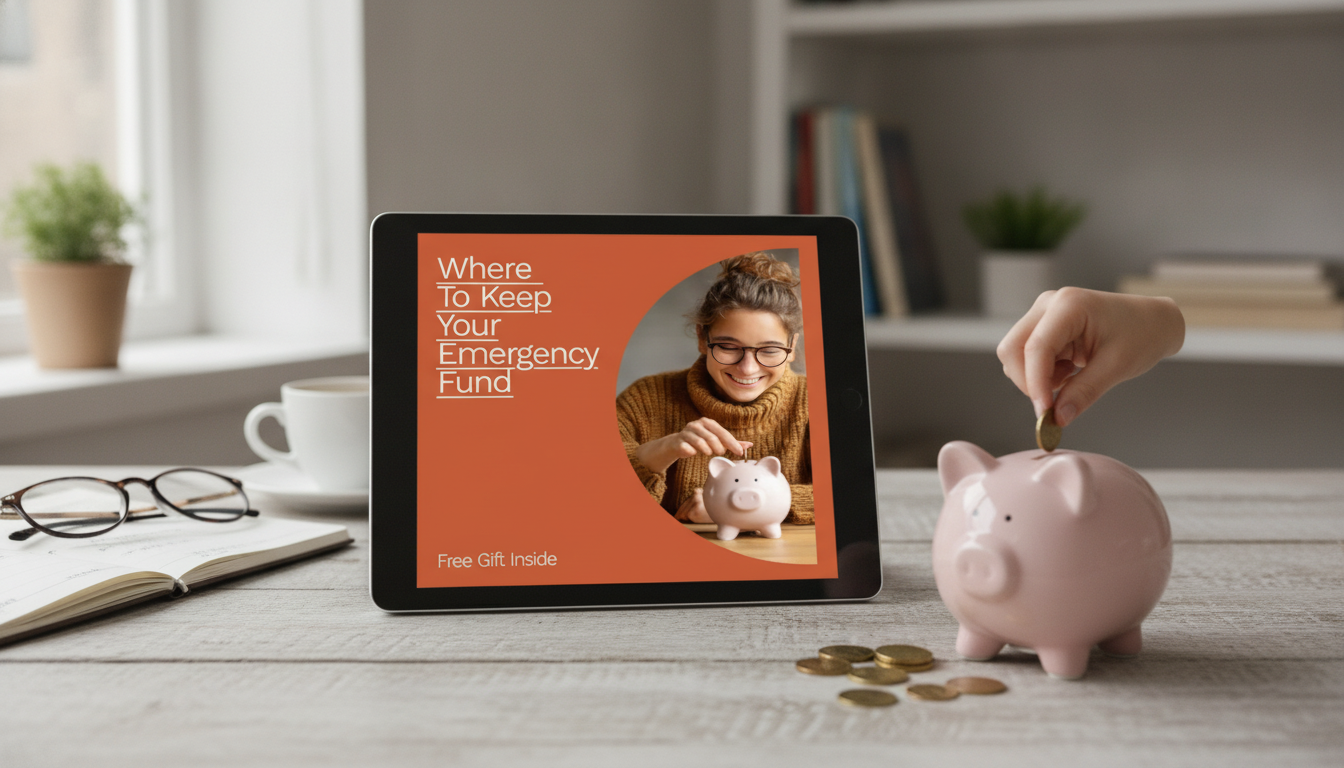
Where to Keep Your Emergency Fund: A Practical Guide to Safe, Accessible Cash
An emergency fund works best when it’s protected from loss, easy to access on short notice, and still earns a reasonable return. The right “home” for this money depends on how quickly it might be needed, how comfortable risk feels in a stressful moment, and whether the account setup removes friction instead of adding it.
What an emergency fund needs to do (and what it shouldn’t)
Emergency savings is less about chasing performance and more about being dependable when life gets messy. A solid emergency fund setup is built around these priorities:
- Stay liquid: cash should be available quickly, ideally within the same day to a few days.
- Protect principal: the goal is stability, not maximizing returns.
- Reduce temptation: keep it separate from daily spending to avoid “accidental” use.
- Remain simple under stress: minimal steps to access, clear transfer paths, and predictable availability.
- Avoid tying it to market swings: investments can drop right when emergencies happen.
If there’s any chance you’ll need the money quickly, “can it be sold?” isn’t the same as “can it be used?” The best emergency fund location is boring on purpose.
How much cash to keep instantly available vs. nearby
Instead of keeping everything in one place, many households do better with a small, fast-access layer and a larger backup layer.
- Keep a small “same-day” amount for immediate needs (unexpected copay, minor car repair, urgent travel).
- Place the rest where it transfers in 1–3 business days for larger emergencies (job loss, major home repair).
- Adjust for your reality: variable income, commission work, or a single-income household often calls for a larger buffer.
- Label accounts clearly if you split them (for example, “Emergency—Immediate” and “Emergency—Backup”).
This approach balances speed and peace of mind: the first tier handles “right now,” and the second tier handles “bigger than expected.”
Best places to keep an emergency fund: options compared
Here’s how common emergency-fund storage options stack up when you factor in access speed, safety, and earning potential.
Emergency Fund Storage Options at a Glance
| Option | Access Speed | Safety | Yield Potential | Best Use |
|---|---|---|---|---|
| High-yield savings account (HYSA) | Same day to 1–3 days | High (if insured) | Medium | Primary emergency fund account |
| Money market deposit account | Same day to 1–3 days | High (if insured) | Low to medium | Primary account if features are helpful (checks/debit) |
| Checking account | Immediate | High (if insured) | Low | Small “immediate” tier only |
| Treasury bills (T-bills) | Depends (maturity/sale timing) | Very high | Medium | Secondary tier for funds not needed instantly |
| Cash at home | Immediate | Low to medium (physical risk) | None | Tiny backup for outages or disasters |
High-yield savings account (HYSA)
An HYSA is often the “sweet spot” for emergency cash: it’s separate from spending, typically easy to transfer, and pays more interest than standard savings. For core emergency funds, prioritize an institution with clear terms and straightforward transfers.
Money market deposit account
These can resemble savings accounts but may include check-writing or debit access. That convenience can be helpful for the immediate tier, but be sure to read the fine print on minimum balances, limits, and fees.
Credit union share accounts
Credit unions sometimes offer strong rates and member-friendly policies. Safety is generally high when the account is properly insured through the NCUA.
Treasury bills (T-bills)
Checking account and cash at home
How to choose the right account setup
- Start with the access timeline: if money must be available today, keep that portion in checking or a savings account with instant transfer features.
- Confirm deposit insurance: for core emergency cash, prefer FDIC-insured banks or NCUA-insured credit unions. (Helpful references: FDIC deposit insurance and NCUA share insurance.)
- Check transfer pathways: link your emergency account to checking and test a transfer so the process is familiar before you need it.
- Watch fees and minimums: avoid monthly maintenance fees or “gotcha” balance requirements that can quietly drain your cushion.
- Separate from everyday spending: a dedicated emergency account makes it harder for the fund to slowly “leak.”
- Consider a two-tier system: (1) immediate cash, (2) backup cash that earns more but stays stable.
For additional consumer guidance on building emergency savings habits, the Consumer Financial Protection Bureau is a solid place to explore education and tools.
Common mistakes that undermine emergency funds
A simple, low-stress blueprint to set it up in one afternoon
Resource for a deeper step-by-step plan
If you want a more structured walkthrough that ties together account choice, access speed, insurance checks, and a tiered approach, use this guide: Where to Keep Your Emergency Fund: A Comprehensive eBook for Financial Security.
- Budget Style Strategy Bundle for Everyday Looks – 5-in-1 Digital Download
- Elegant 280ML Ceramic Coffee Cup with Saucer – Striped Latte & Tea Mug
FAQ
Should an emergency fund be in checking or savings?
A split approach usually works best: keep a small amount in checking for same-day needs, and hold the bulk in an insured high-yield savings account (or similar) to earn more interest and stay separated from everyday spending.
Is it safe to keep an emergency fund in a high-yield savings account?
Yes—safety is typically high when the account is FDIC-insured (banks) or NCUA-insured (credit unions) up to the applicable limits. Verify the institution and be cautious with products that look like savings but aren’t insured deposit accounts.
Can Treasury bills replace a savings account for emergencies?
T-bills can work as a secondary tier for money you don’t expect to need immediately, since access may depend on maturity timing or selling. For near-term emergencies, an insured deposit account is usually more reliable for quick transfers.















Leave a comment