-
Shop
- Adidas
- Advanced Technologies
- AI Skills Mastery 2026 Collection
- Astrology & Tarot Products
- Beauty
- Beauty Guides Collection
- Best-Sellers
- Car Accessories
- Confidence
- Dating & Social Skills
- Digital Resources
- AI & Technology
- AI Skills
- Budgeting & Saving
- Car Buying & Ownership
- Cozy Feast Collection
- Electronics & Technology
- Emotional Intelligence
- Entrepreneurship & Business Growth
- Financial Education
- Financial Independence
- Financial Mindset & Psychology
- Goal Setting
- Hobbies
- Home Styling & Organization
- Kitchen & Recipes
- Leadership
- Mindfulness
- Mindset
- Motivation
- Online Business
- Parenting & Child Development
- Pet Lifestyle & Wellness
- Positive Thinking
- Productivity
- Self Confidence
- Sleep Improvement
- Smart Life with AI
- Stress Management & Relaxation
- Travel Planning
- Yoga & Fitness
- Yoga & Mind-Body Practices
- Education & Learning
- Family & Parenting
- Fashion
- Alexander McQueen
- Bags
- Bags & Wallets
- Balenciaga
- Belts
- Blazers
- Bottega Veneta
- Brunello Cucinelli
- Burberry
- Chanel
- Chloé
- Dior
- Dolce & Gabbana
- Dresses
- Etro
- Fendi
- Gucci
- Hats & Hair Accessories
- Hoodies & Sweatshirts
- Jacquemus
- Jil Sander
- Keychains
- Kiton
- Luggage
- Miu Miu
- Off-White
- Outerwear
- Prada
- Rick Owens
- Saint Laurent
- Shoes
- Socks & Tights
- Sweaters & Cardigans
- The Row
- Tom Ford
- Tops & Shirts
- Valentino
- Valentino Garavani
- Versace
- Vivienne Westwood
- Watches
- Fashion Accessories
- Furniture
- Gadgets
- Health & Beauty
- Health & Wellness
- Home & Garden
- Home Supplies
- Jewelry
- Kids & Babies
- Kitchen
- Kitchen Best-Sellers
- Nike
- Patio, Lawn & Garden
- Personal Growth
- Personal Style & Fashion
- Pet Care
- Pet Supplies
- Pets
- Smart Home Living Guides
- Sport & Outdoors
- Stress Relief & Relaxation
- Super Deals
- TikTok Growth & Monetization Mastery
- Travel
- Travel & Adventure
- Wealth
- Wellness
- Popular
- Best deals
4-in-1 Pet Enrichment Toolkit Bundle for Calmer Days
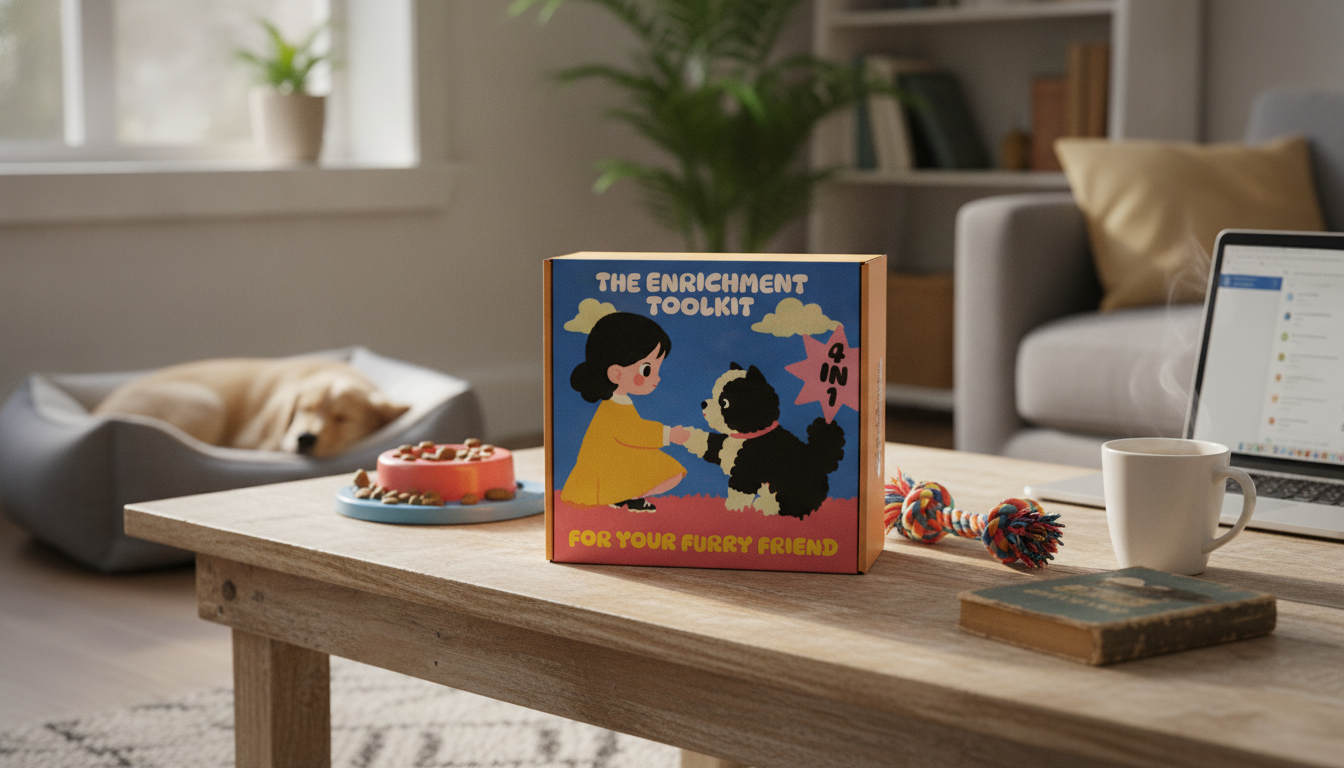
The Enrichment Toolkit for Your Furry Friend: A 4-in-1 Digital Bundle for Happier, Calmer Pets
Daily enrichment can reduce boredom, support calm behavior, and help pets use natural instincts like sniffing, foraging, chewing, and problem-solving. A simple plan matters more than “perfect” activities, and a digital bundle makes it easier to stay consistent—especially on indoor days, busy weeks, or when the weather (or your schedule) doesn’t cooperate.
This 4-in-1 digital toolkit is built around flexible, repeatable ideas you can scale up or down depending on your pet’s age, mobility, motivation, and your available time. For general guidance on why enrichment supports well-being, you can also reference resources from the American Veterinary Medical Association (AVMA) and the ASPCA.
Why enrichment matters at home
- Channels natural behaviors (sniffing, seeking, chewing, scratching) into healthy outlets.
- Helps reduce common boredom signals such as restlessness, excessive vocalizing, destructive chewing, or attention-seeking.
- Supports confidence-building by offering achievable challenges and predictable routines.
- Adds quality activity for indoor days, bad weather, recovery periods, or busy weeks.
Enrichment isn’t about “tiring them out” as much as it is about meeting needs. Sniffing, licking, shredding, and searching can be deeply settling because they give the brain a clear job to do. When those needs aren’t met, many pets create their own jobs—often the kind you’d rather avoid.
What’s included in the 4-in-1 digital bundle
- Digital format for quick access, reprinting, and sharing across household devices.
- Mix of low-effort and higher-engagement options to rotate throughout the week.
- Activities that can be scaled up or down depending on age, mobility, and motivation (food, toys, play, praise).
- Reusable frameworks so enrichment doesn’t require constant new purchases.
Bundle overview at a glance
| Part of the toolkit | Primary goal | Best for | Time to set up |
|---|---|---|---|
| Foraging & food puzzles pack | Mental work + slow feeding | Food-motivated pets, rainy days | 5–10 minutes |
| Scent & sniffing games guide | Calm focus + natural sniffing needs | High-energy or anxious pets | 2–10 minutes |
| Training mini-challenges plan | Impulse control + engagement | Pets that enjoy learning | 5–15 minutes |
| Enrichment planner & rotation templates | Consistency + variety without overwhelm | Busy households, multi-pet homes | 10 minutes weekly |
If you want a single download designed to cover multiple enrichment “styles” (foraging, scent work, training, and planning), the The Enrichment Toolkit for Your Furry Friend – 4-in-1 Digital Bundle for Pet Enrichment is made to be reused week after week without having to constantly hunt for new ideas.
How to use the toolkit day to day
- Start with one activity type for 3–4 days to establish a predictable routine before adding variety.
- Use a simple pattern: one calm activity (sniff/lick/chew) + one active activity (train/play) per day.
- Keep sessions short and end while the pet is still engaged to build positive anticipation.
- Track favorites and difficulty using the planner so activities stay motivating rather than frustrating.
A practical rhythm looks like: a short sniff game in the morning, then a quick training mini-challenge later, and a calm chew/lick option in the evening. That “bookends” the day with decompression, not just excitement.
Choosing the right activities for your pet
- Energy level: pair active play with decompression (sniffing, licking, chewing) to prevent “wired” behavior.
- Age and mobility: adapt challenges—more sniffing and gentle problem-solving for seniors; shorter, frequent sessions for puppies/kittens.
- Motivation type: some pets prefer food puzzles, others prefer toy movement, social play, or learning cues for rewards.
- Sensitivity and anxiety: select low-noise, low-frustration games first; increase challenge gradually.
- Multi-pet homes: provide separate stations to reduce competition; rotate turns to prevent resource guarding.
One helpful rule: if your pet quits and looks confused, the challenge is probably too hard. If they solve it instantly and wander off, it might be too easy. The sweet spot is “easy to win” with a little effort—enough to feel satisfying.
Setting up enrichment safely
- Supervise new games until it’s clear the pet won’t ingest materials or become over-aroused.
- Avoid tiny items that can be swallowed; select durable materials appropriate for the pet’s chew strength.
- Keep difficulty “easy to win” at first; frustration can increase anxiety or unwanted behavior.
- Food-based enrichment should be balanced with daily calories; adjust meal portions as needed.
- If there is a history of guarding, consult a qualified trainer before using high-value food puzzles around other pets or children.
Safety also includes emotional safety: choose games that match your pet’s confidence today, not where you hope they’ll be next month. For additional animal welfare perspectives on enrichment and environment, the RSPCA provides broad guidance across species.
Who this bundle is best for
Getting started in the first week
More in-stock digital downloads you can add to your routine
- The Enrichment Toolkit for Your Furry Friend – 4-in-1 Digital Bundle for Pet Enrichment
- Budget Style Strategy Bundle for Everyday Looks – 5-in-1 Digital Download
- Deep Autumn Wardrobe Made Easy: Your Ultimate Guide to Deep Autumn Color Palette Clothing
FAQ
Is enrichment only for high-energy pets?
No. All pets benefit from enrichment; the key is matching the activity to the individual. Calmer or senior pets often do best with sniffing, licking, chewing, and gentle puzzles, while puppies and kittens usually need shorter sessions more frequently.
How long should an enrichment session last?
Most sessions work well in the 2–15 minute range. End while your pet is still engaged, and consider doing a few short sessions across the day rather than one long session that can lead to frustration or overstimulation.
Can food puzzles replace a meal?
Yes for many pets, as long as calories are managed. Measure the portion (often using part or all of the daily ration), watch body weight over time, and adjust amounts if you notice changes in digestion or energy.
















Leave a comment