-
Shop
- Adidas
- Advanced Technologies
- AI Skills Mastery 2026 Collection
- Astrology & Tarot Products
- Beauty
- Beauty Guides Collection
- Best-Sellers
- Car Accessories
- Confidence
- Dating & Social Skills
- Digital Resources
- AI & Technology
- AI Skills
- Budgeting & Saving
- Car Buying & Ownership
- Cozy Feast Collection
- Electronics & Technology
- Emotional Intelligence
- Entrepreneurship & Business Growth
- Financial Education
- Financial Independence
- Financial Mindset & Psychology
- Goal Setting
- Hobbies
- Home Styling & Organization
- Kitchen & Recipes
- Leadership
- Mindfulness
- Mindset
- Motivation
- Online Business
- Parenting & Child Development
- Pet Lifestyle & Wellness
- Positive Thinking
- Productivity
- Self Confidence
- Sleep Improvement
- Smart Life with AI
- Stress Management & Relaxation
- Travel Planning
- Yoga & Fitness
- Yoga & Mind-Body Practices
- Education & Learning
- Family & Parenting
- Fashion
- Alexander McQueen
- Bags
- Bags & Wallets
- Balenciaga
- Belts
- Blazers
- Bottega Veneta
- Brunello Cucinelli
- Burberry
- Chanel
- Chloé
- Dior
- Dolce & Gabbana
- Dresses
- Etro
- Fendi
- Gucci
- Hats & Hair Accessories
- Hoodies & Sweatshirts
- Jacquemus
- Jil Sander
- Keychains
- Kiton
- Luggage
- Miu Miu
- Off-White
- Outerwear
- Prada
- Rick Owens
- Saint Laurent
- Shoes
- Socks & Tights
- Sweaters & Cardigans
- The Row
- Tom Ford
- Tops & Shirts
- Valentino
- Valentino Garavani
- Versace
- Vivienne Westwood
- Watches
- Fashion Accessories
- Furniture
- Gadgets
- Health & Beauty
- Health & Wellness
- Home & Garden
- Home Supplies
- Jewelry
- Kids & Babies
- Kitchen
- Kitchen Best-Sellers
- Nike
- Patio, Lawn & Garden
- Personal Growth
- Personal Style & Fashion
- Pet Care
- Pet Supplies
- Pets
- Smart Home Living Guides
- Sport & Outdoors
- Stress Relief & Relaxation
- Super Deals
- TikTok Growth & Monetization Mastery
- Travel
- Travel & Adventure
- Wealth
- Wellness
- Popular
- Best deals
Daily Manifestation Checklist: Positive Thinking That Sticks
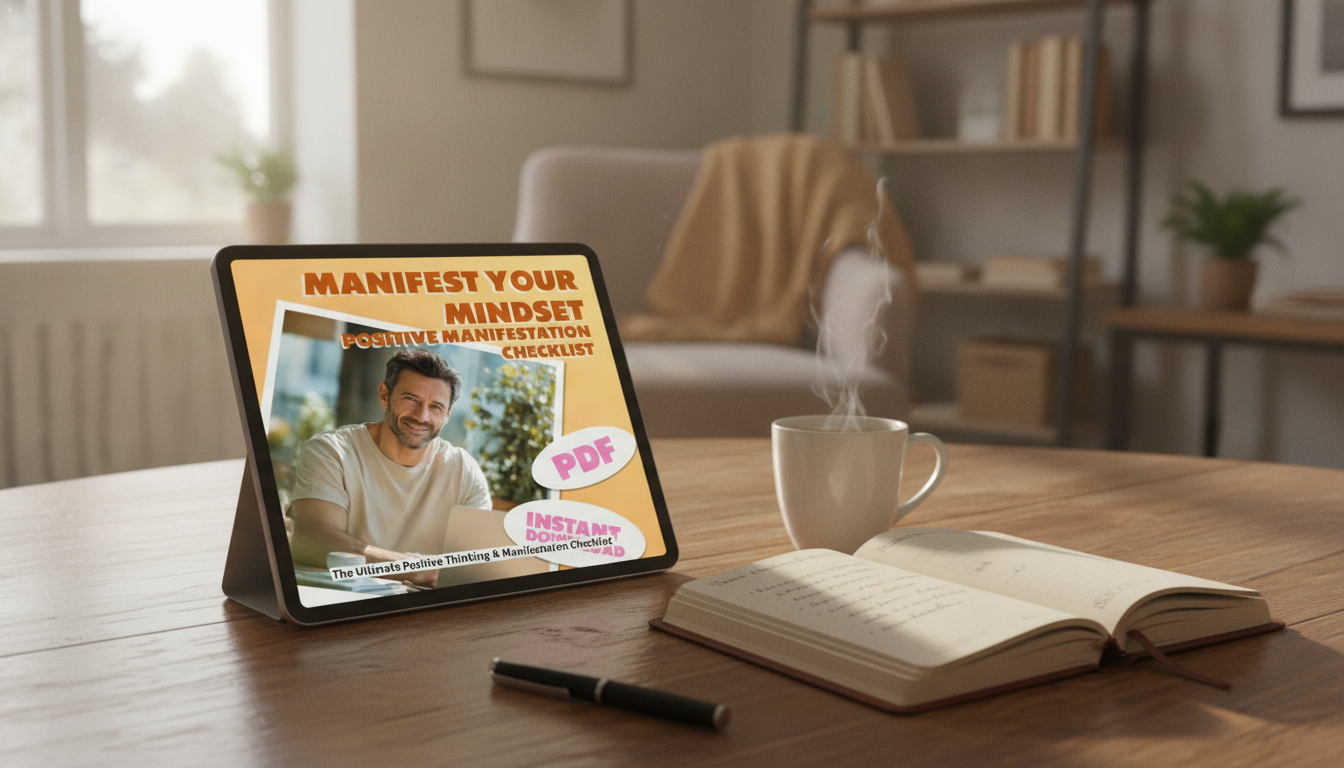
Manifest Your Mindset: A Positive Thinking & Manifestation Checklist for Daily Momentum
Positive thinking becomes more powerful when it’s paired with consistent, repeatable actions. A checklist turns “I want to feel better and move forward” into a simple daily rhythm: clarify what’s wanted, align thoughts and feelings, take a small step, and reflect. Over time, that rhythm supports steadier focus, calmer decision-making, and follow-through that actually matches your goals.
What a manifestation checklist actually does
A manifestation checklist isn’t about forcing constant positivity or pretending problems don’t exist. It’s a structure for returning to alignment—again and again—without spiraling into overthinking.
- Creates a predictable routine that reduces decision fatigue and overthinking
- Turns vague goals into clear prompts: intention, belief, action, and review
- Builds evidence through small wins, which strengthens confidence and persistence
- Supports emotional regulation by adding grounding and gratitude practices
- Helps identify misalignment (saying one thing, doing another) without self-judgment
This matters because confidence is often built through experience—what psychology calls self-efficacy, or your belief in your ability to carry out actions that influence outcomes (APA Dictionary of Psychology: self-efficacy).
The ultimate positive thinking & manifestation checklist (daily flow)
Use this as a flexible sequence. If you only do three parts, make them: intention, one aligned action, and a quick review.
Daily checklist snapshot: prompts, time, and outcome
| Checklist step | Time | Outcome to notice |
|---|---|---|
| Morning reset | 2–5 min | Less mental noise; clearer focus |
| Single intention | 1 min | A defined target for the day |
| Empowering thought | 1 min | Reduced all-or-nothing thinking |
| Visualization | 1–2 min | More motivation and direction |
| Identity cue | 1 min | Behavior feels more natural |
| Aligned action | 10–30 min | Progress you can measure |
| Environment support | 2–5 min | Fewer obstacles; easier follow-through |
| Midday check-in | 1 min | Momentum restored quickly |
| Evening review | 3 min | Learning loop; better next day |
| Gratitude close | 1–2 min | More optimism grounded in evidence |
- Morning reset (2–5 minutes): breathe slowly, unclench jaw/shoulders, name the emotion present without fixing it.
- Set a single intention: write one sentence describing the outcome and how it feels (calm, capable, supported, energized).
- Choose one empowering thought: replace absolute language (“never”, “always”) with a workable belief (“I’m learning”, “I can improve”, “I can ask for help”).
- Visualization (60–90 seconds): picture a normal day where the goal is already in motion; focus on sensory details and behaviors. (Mental rehearsal and imagery are widely used performance tools; see an overview via National Library of Medicine (PubMed).)
- Identity cue: write one line starting with “I am the kind of person who…” and finish it with a small behavior you can do today.
- Aligned action: pick one concrete step that takes 10–30 minutes and put it on the calendar.
- Environment support: remove one friction point (prepare clothes, open the document, pre-fill water bottle, tidy one surface).
- Midday check-in (1 minute): ask “What’s the next smallest step?” and do it before switching tasks.
- Evening review (3 minutes): list one win, one lesson, one adjustment for tomorrow.
- Gratitude close: write 3 specific things that happened today (small counts) to train attention toward evidence of progress. Gratitude practices are linked with well-being and resilience (American Psychological Association: The power of gratitude).
If you want a ready-made structure you can reuse without rewriting prompts, Manifest Your Mindset: The Ultimate Positive Thinking & Manifestation Checklist keeps intention, belief, action, and reflection in one repeatable flow.
Weekly alignment: deepen belief and reduce self-sabotage
Daily momentum is the engine; weekly alignment is the steering wheel. This is where scattered goals become one clear theme and self-sabotage gets named (without drama) so it can soften.
- Pick one weekly theme (confidence, health, money, relationships, creativity) to avoid scattered goals
- Do a “belief audit”: write the top 3 recurring negative thoughts; rewrite each into a realistic bridge belief
- Track actions, not just affirmations: count reps, pages, outreach messages, minutes practiced
- Plan two “minimum days” for busy schedules: define the tiniest version of the habit to keep consistency
- Declutter one trigger: unfollow, mute, or reduce exposure to content that spikes comparison and doubt
- Schedule one replenishing activity that supports regulation (walk, stretch, journaling, early bedtime)
Affirmations that feel believable (and how to use them)
Affirmations work best when they sound like someone who’s building evidence—not someone trying to hypnotize themselves into certainty. The goal is a statement your nervous system can accept and act on today.
A simple ritual helps. Even a consistent “start signal” (making tea, sitting at the same spot, opening your journal) can train follow-through. If you like turning your morning reset into a calm, repeatable moment, the Elegant 280ML Ceramic Coffee Cup with Saucer – Striped Latte & Tea Mug is an easy way to make the routine feel intentional.
Common blocks and quick resets
A simple way to start today (10 minutes total)
Digital checklist option for repeatable structure
If you want something you can open, follow, and repeat without redesigning your routine each week, Manifest Your Mindset: The Ultimate Positive Thinking & Manifestation Checklist is built around that “prompt → action → review” loop. Consistency matters more than length; a compact daily checklist often beats occasional long sessions.
FAQ
How long should a manifestation routine take each day?
Most routines work well in 5–15 minutes, as long as they include one aligned action. Start small and only add more steps after the habit feels automatic.
Do affirmations work if they don’t feel true yet?
They tend to work better as “bridge beliefs” (like “I’m learning” or “I can improve”) paired with a small action that creates proof. When your actions generate evidence, the words start to feel more believable over time.
What’s the difference between manifestation and goal-setting?
Manifestation focuses on attention, identity, and emotional alignment; goal-setting focuses on planning and execution. Combining both—belief plus action plus review—usually creates more consistent follow-through.
Recommended for you



Beginner Travel Vlogging Gear Checklist (Pack Light)
Jun 19, 2026













Leave a comment