-
Shop
- Adidas
- Advanced Technologies
- AI Skills Mastery 2026 Collection
- Astrology & Tarot Products
- Beauty
- Beauty Guides Collection
- Best-Sellers
- Car Accessories
- Confidence
- Dating & Social Skills
- Digital Resources
- AI & Technology
- AI Skills
- Budgeting & Saving
- Car Buying & Ownership
- Cozy Feast Collection
- Electronics & Technology
- Emotional Intelligence
- Entrepreneurship & Business Growth
- Financial Education
- Financial Independence
- Financial Mindset & Psychology
- Goal Setting
- Hobbies
- Home Styling & Organization
- Kitchen & Recipes
- Leadership
- Mindfulness
- Mindset
- Motivation
- Online Business
- Parenting & Child Development
- Pet Lifestyle & Wellness
- Positive Thinking
- Productivity
- Self Confidence
- Sleep Improvement
- Smart Life with AI
- Stress Management & Relaxation
- Travel Planning
- Yoga & Fitness
- Yoga & Mind-Body Practices
- Education & Learning
- Family & Parenting
- Fashion
- Alexander McQueen
- Bags
- Bags & Wallets
- Balenciaga
- Belts
- Blazers
- Bottega Veneta
- Brunello Cucinelli
- Burberry
- Chanel
- Chloé
- Dior
- Dolce & Gabbana
- Dresses
- Etro
- Fendi
- Gucci
- Hats & Hair Accessories
- Hoodies & Sweatshirts
- Jacquemus
- Jil Sander
- Keychains
- Kiton
- Luggage
- Miu Miu
- Off-White
- Outerwear
- Prada
- Rick Owens
- Saint Laurent
- Shoes
- Socks & Tights
- Sweaters & Cardigans
- The Row
- Tom Ford
- Tops & Shirts
- Valentino
- Valentino Garavani
- Versace
- Vivienne Westwood
- Watches
- Fashion Accessories
- Furniture
- Gadgets
- Health & Beauty
- Health & Wellness
- Home & Garden
- Home Supplies
- Jewelry
- Kids & Babies
- Kitchen
- Kitchen Best-Sellers
- Nike
- Patio, Lawn & Garden
- Personal Growth
- Personal Style & Fashion
- Pet Care
- Pet Supplies
- Pets
- Smart Home Living Guides
- Sport & Outdoors
- Stress Relief & Relaxation
- Super Deals
- TikTok Growth & Monetization Mastery
- Travel
- Travel & Adventure
- Wealth
- Wellness
- Popular
- Best deals
Mood Mapping With AI: Spot Patterns & Build Better Habits
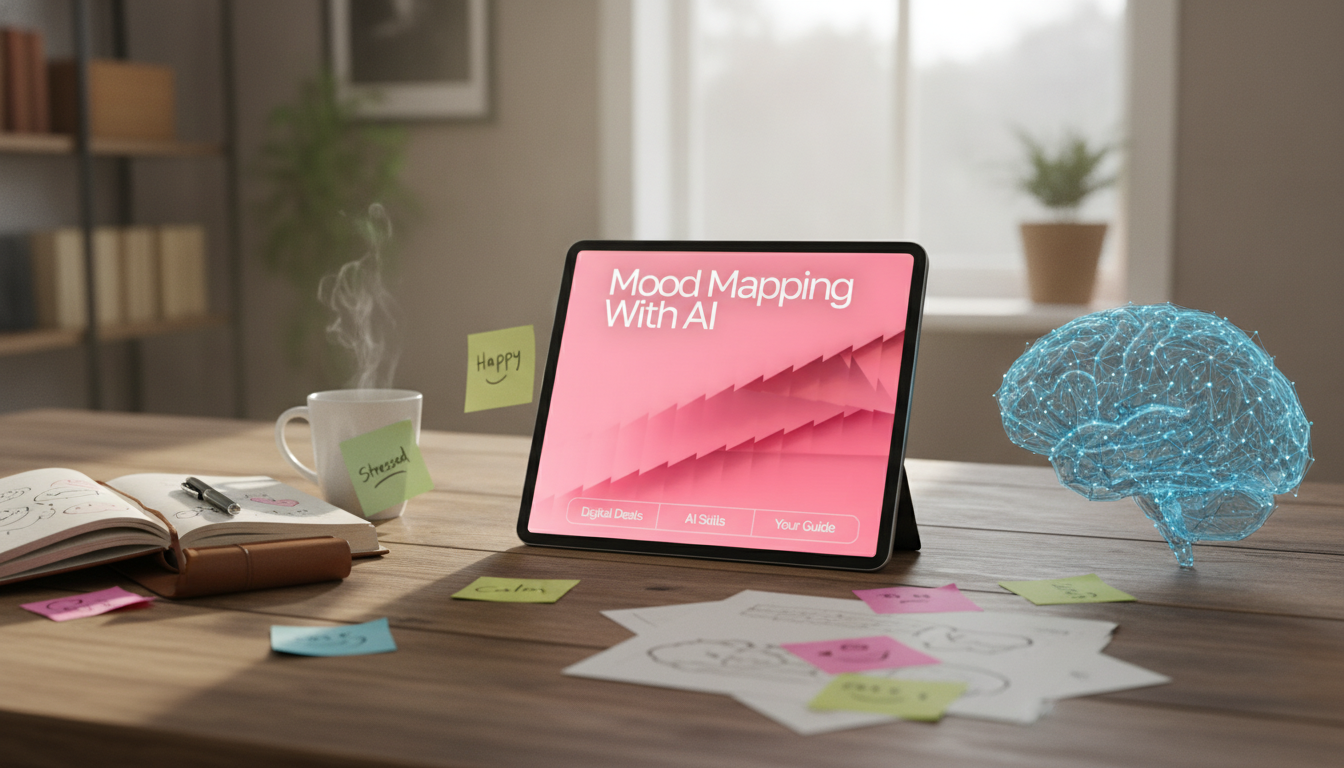
Mood Mapping with AI: A Daily Practice for Clearer Patterns, Calmer Choices, and Better Habits
Mood mapping blends quick check-ins with simple AI-assisted organization to turn scattered feelings into recognizable patterns. With visual mood logs, reflective journaling, and small habit experiments, it becomes easier to spot triggers, protect energy, and build routines that actually fit real life. Over time, the goal isn’t to “fix” emotions on command—it’s to notice what’s happening sooner, understand what helps, and make calmer choices before a tough day snowballs.
What mood mapping is (and what it isn’t)
Mood mapping is the practice of recording short mood snapshots along with a few context clues—sleep, stress, food, movement, workload, or social load—so repeating links become easier to spot. Instead of trying to remember how the week felt, you’re collecting small data points that reflect real life.
AI can help by summarizing entries, clustering themes (like “sleep debt” or “screen fatigue”), and turning notes into simple visuals. It’s best used as an organizer and pattern-finder, not as an authority. Your judgment still matters most, especially when deciding what to change.
What mood mapping isn’t: a diagnosis, therapy, or a scoreboard for “good” emotions. Every mood carries information. A helpful baseline is consistency over depth—60 seconds daily often beats occasional long journaling sessions because the signal becomes clearer with repetition.
Set up a daily mood tracking rhythm that stays doable
The easiest system is the one you’ll actually use. Pick one check-in time that matches your lifestyle: morning for a “forecast,” afternoon for stress signals, or evening for reflection. Keep it light enough to complete even on busy days.
- Choose a simple scale (1–5 or 1–10) plus 2–3 mood labels (calm, tense, motivated, foggy).
- Add one context field that matters most right now (sleep, workload, movement, caffeine, social time, cycle notes).
- Create a “minimum entry” rule: rating + one sentence.
- Decide what you want to notice first: energy dips, irritability, focus, social drain, or motivation spikes.
| Field | Example options | Time to fill |
|---|---|---|
| Mood rating | 1–5 (low to high) or 1–10 | 10 seconds |
| Mood labels | calm, anxious, focused, drained, upbeat | 15 seconds |
| Body signal | tight chest, headache, relaxed, restless | 10 seconds |
| Context note | sleep 6h; back-to-back meetings; skipped lunch | 20 seconds |
| One small action | 10-min walk; early bedtime; text a friend | 20 seconds |
| Tag of the day | work, family, health, social, recovery | 10 seconds |
AI visual mood logs: turn notes into patterns you can actually see
Once you have a week or two of entries, visuals can reduce overthinking. Instead of replaying every detail, you’re looking at a “map” that makes trends easier to recognize.
- Convert daily entries into weekly “mood weather” (sunny, cloudy, stormy) to keep interpretation simple.
- Use color mapping by label: calm (blue), energized (yellow), tense (red), foggy (gray).
- Group entries by themes such as work friction, social overload, sleep debt, nutrition gaps, and screen fatigue.
- Track leading indicators: body cues (jaw tension, racing thoughts) that show up before a mood drop.
- Set a review cadence: 10 minutes weekly; 30 minutes monthly for trend-checking.
Stress often shows up in the body before it becomes a clear emotion. If you want a straightforward overview of how stress affects physical systems, the American Psychological Association’s overview of stress effects on the body is a helpful reference point.
Journaling prompts that support insight without spiraling
Journaling works best when it’s specific and time-capped. One prompt per day is plenty—especially if the goal is clarity rather than a deep dive that turns into rumination.
For broader, practical guidance on taking care of mental health basics (sleep, connection, stress management), the National Institute of Mental Health’s guide to caring for your mental health offers a solid foundation.
Habit-building toolkit: small experiments that match your data
Habits become easier when the environment supports them—simple cues, fewer steps, and a clear “next action.” If you want a deeper dive into why small routines stick, Harvard Health Publishing has resources on habit formation at Harvard Health Publishing.
Mood-to-habit matching ideas
A simple weekly review that leads to better decisions
Using a guided digital workbook to stay consistent
If you want a ready-to-use structure, this guided download is built around visual mood logs, journaling prompts, and small habit experiments: Mood Mapping with AI | Digital eBook Guide for Daily Mood Tracking Ideas with AI | Visual Mood Logs, Journaling Prompts & Habit-Building Toolkit.
Environment matters too. If your logs show that you downshift best with softer lighting during evening reflection, consider a calming corner with warmer light like the Luxury Retro French Romantic Copper Crystal Wall Lamp. And if comfort is part of regulation—especially on higher-stress days—an easy, breathable staple such as the Calvin Klein Jeans Light Blue Cotton T-shirt for Men can support a “less friction” routine (get comfortable, sit down, do the 2-minute check-in).
FAQ
How long does it take to see useful patterns from mood mapping?
Many people notice early clues in 7–14 days, especially around sleep, workload, and social load. Stronger trends usually show up after 4–6 weeks when weekly reviews have enough data to compare.
Is mood mapping with AI private and safe?
Privacy depends on the tool you use and where your entries are stored. If you’re unsure, keep details general (avoid names and highly sensitive specifics), and review the platform’s data policies or choose options that work offline or locally.
What if tracking moods makes feelings feel worse?
Shorten the entry to a rating plus a body cue, set a strict time cap (like 2 minutes), and focus on needs and next steps rather than replaying the story. If distress increases or feels unmanageable, it’s a good idea to seek support from a qualified professional.














Leave a comment